
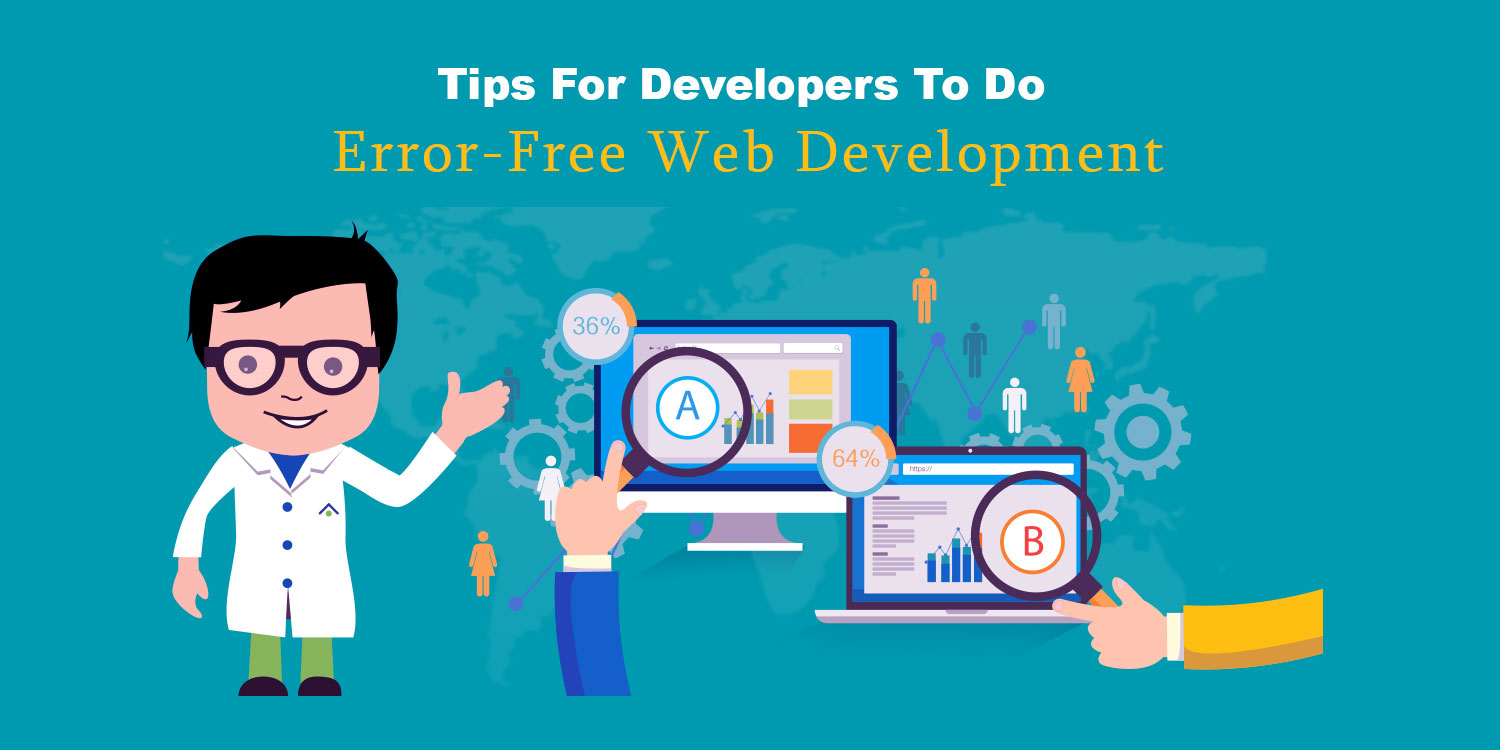

Creating a great website isn’t just about making pretty pages. There are plans, technical skills, scalability and improvements that are needed in a professional website. Too many projects do not make it to fruition because they are only concerned with aspects of appearance and ignore key development principles.
Based on hands-on experience of frontend development services, a single thing is apparent. Following Website Design Best Practices at the outset will prevent most of the problems that may arise in a website.
By being aware of the common web design pitfalls, businesses can ensure they avoid unnecessary redesign costs and avoid issues in their operations. For the project, whether you are working on the backend, website designs (UI/UX), working on the front end, or developing the CMS, all parts need to align with the long term business goals.
This guide will give you an understanding of what Website Design Mistakes to Avoid and how to choose and plan for the professional Website Development Services.
The understanding of the basics of website development. Knowing the fundamentals of website development
In modern websites, several components come together to build the website.
Frontend Layer
Frontend development is where all the users interact with and see. This includes:
- Navigation systems
- Responsive layouts
- Buttons and forms
- Interactive elements
- User experience improvements
When it comes to professional website design services, Website Design Best Practices are crucial as they are the ones encountered first by the user.
Backend Layer
Backend development handles:
- Databases
- Authentication systems
- Server logic
- API integrations
- Business processes
Great UI is not enough with not-so-great backends.
CMS Layer
With CMS Development, organizations can manage content without having to edit code by hand.
Some of the most common CMS features are:
- Blog management
- Content publishing
- User permissions
- SEO settings
- Page editing capabilities
The components work together in a variety of ways.
There is a need for coordination between website design (UI/UX), frontend, backend and CMS Development for successful websites. If one weak spot develops, it’s going to compromise the whole site.
It is essential to understand the importance of website design best practices
The Website Design Best Practices is not a theory made suggestion. They are standards based on practical experience from real projects.
If you follow these standards then you will improve:
- User experience
- SEO performance
- Website speed
- Accessibility
- Scalability
- Maintainability
Web Design Best Practice is often overlooked and can come at a high cost if there is a redesign to be done later.
Long-Term Maintainability
A well-structured website makes it easier to add new content to the site and to enlarge the site. New features can be added to teams without having to re-construct the system.
Scalability Advantages
As businesses expand, web sites should support:
- More traffic
- Additional pages
- New integrations
- Expanded services
Professional developers always think ahead, not only to meet the current needs, but to look forward for future needs as well.
10 Website Development Blunders to steer clear of
Many common web design mistakes seem minor at first, but can cause big issues once the site goes online.
Poor Navigation Structure
Information should be readily accessible to the user. Some of the most often committed Website Design Mistakes to Avoid include confusing menus, inconsistent page structure and unnecessary complexity.
Ignoring Mobile Users
Major traffic volume for mobile to modern websites. There are some common Web Design Mistakes such as:
- Small text sizes
- Broken layouts
- Difficult navigation
- Poor touch experiences
It is recommended to follow best practices for website design from the start, which include building a responsive website.
Going over the top on aesthetics.
If too many animations and visual effects are used, they can decrease the usability. Professional developers do not compromise on aesthetics and performance.
Inconsistent User Interface Design
Users are confused with inconsistent colors, spacing, and typography. Consistency is achieved through website design best practices, which include the use of re-usable components and design systems.
Weak Content Structure
If paragraphs are not marked with headings, it makes them unreadable. Content hierarchy enhances user experience and SEO.
Performance Problems
Slow websites are one of the most significant Website Design Mistakes to Avoid.
Common causes include:
- Oversized images
- Unoptimized code
- Too many plugins
- Poor hosting environments
Accessibility Oversights
One of the Web Design Errors that are often found during redesign projects is ignoring accessibility. Websites that are accessible benefit all and have better usability.
Prior to the commencement of development, do a site assessment.
Assessment is always the first step in professional website development services. Sometimes, this step is omitted, which results in wrong assumptions and project delays.
Existing Website Analysis
Teams examine:
- Current performance
- Technical limitations
- Security concerns
- User behavior
Business Requirement Analysis
Experienced agencies determine:
- Project objectives
- Target audiences
- Required features
- Growth expectations
Competitor Evaluation
Competitor research can be used to determine:
- Industry standards
- User expectations
- Content opportunities
But copying what other people are doing without any regard to their own uniqueness is one of the Common Web Design Mistakes that professionals steer clear of.
Technical Assessment
Development specialists evaluate:
- Hosting environments
- Existing integrations
- Platform limitations
- Security requirement
Website Development Scope Definition
Well-defined scope is a client and developer safeguard. Documenting requirements prior to development is part of Website Design Best Practices.
Functional Requirements
Examples include:
- User registration systems
- Contact forms
- Ecommerce features
- Search capabilities
Technical Requirements
Technical planning covers:
- Hosting requirements
- Framework selection
- Security expectations
- API integrations
Content Requirements
Teams identify:
- Existing content
- Missing assets
- Media requirements
- SEO structure
Timeline and Deliverables
Avoiding misunderstandings during execution by defining milestones. The poor scope definition is one of the major Website Design Mistakes to Avoid as the lack of clarity in expectations can lead to delays and extra charges too.
Choosing Website Development Services is a crucial choice. The decision of Web Development Services is a critical one
Business objectives are the key to selecting the appropriate services — not trends.
Website Design (UI/UX)
There are numerous ways that website design services are dedicated:
- User journeys
- Wireframes
- Visual consistency
- Content hierarchy
Frontend Development Services
Frontend web development services guarantee:
- Responsive layouts
- Browser compatibility
- Performance optimization
- Interactive experiences
However, from experience in frontend development services, it is quite easy to resolve usability issues during development phase as opposed to after launch.
Backend Development Services
These are the services provided by the back-end developer:
- Server logic
- Databases
- Integrations
- Security systems
CMS Development Services
CMS Development streamlines content management and frees up time for businesses from routine updates by developers.
Ensuring that services are aligned with business goals
Any website development service and expertise must back operational objectives and not unneeded features. One of the Common Web Design Mistakes is selecting the wrong services which adds to the complexity of project and maintenance.
Frontend vs Backend Development
There are a lot of companies that are not aware that there’s a distinction between the backend and the frontend. Both areas are important in their own right but neither will work without the other.
Frontend Developers can be classified into three types.There are three types of Frontend Developers.
Frontend developers work on the following aspects:
- Responsive layouts
- User interactions
- Accessibility
- Browser compatibility
- Performance optimization
The Web Design Best Practices are used widely in the Frontend development as the users directly interact with this layer.
Responsibilities of Backend Developers
Backend teams manage:
- Databases
- Business logic
- Authentication systems
- APIs and integrations
- Security controls
Robust backend support for stability and scalability.
Both must work together, why?
While a great interface is essential, it won’t save them if the backend systems are weak, and strong backend functionality will not be useful if users don’t know how to navigate the site. Coordination between both is essential in professional website development services.
CMS Development Selection Process
One of the Website Design Mistakes to Avoid is selecting the wrong content management system.
Small Business Requirements
When deciding where to invest their money, small businesses typically consider:
- Ease of use
- Lower maintenance
- Simple content updates
- Faster implementation
Enterprise Requirements
For larger organizations, they may need:
- Role-based permissions
- Complex workflows
- Custom integrations
- Scalability
Maintenance Considerations
There are varying levels of technical skills needed for some CMS platforms. According to Website Design Best Practices, do not simply choose a solution that is popular and is actually viable for long-term use.
Information Architecture and User Journey Planning
Navigation is the way they move through the site and is influenced by information architecture.
Professional teams organize:
- Main pages
- Supporting pages
- Blog categories
- Conversion pages
User journey planning assists visitors to take a logical path from information collection to action. One of the Common Web Design Mistakes that frequently get fixed in redesign projects is poor page organisation.
The following tips are included for SEO Considerations During Development
SEO activities should be embedded in the development process rather than incorporated after it is up and running.
URL Structure
Simple URLs that are descriptive are easier to use and searchable.
Heading Structure
The correct use of heading hierarchy makes content easier to read and better organized.
Metadata Management
CMS Development should be easily controlled:
- Meta titles
- Meta descriptions
- Social sharing settings
Internal Linking Strategy
Of course, when it comes to professional website development services, these link related pages to enhance navigation and content authority.
Planning for performance and speed. Performance and Speed Planning
From the start, performance is a key consideration in Website Design Best Practices.
Asset Optimization
Development teams optimize:
- Images
- CSS files
- JavaScript files
- Fonts
Hosting Considerations
Regardless of development, poor environments will lead to slow load times.
Performance Targets
Professional agencies have measurable objectives for:
- Loading speed
- Server response times
- User experience metrics
Slow websites continue to be one of the Top 10 Website Design Mistakes To Avoid.
Planning for Scalability
Businesses evolve over time. Websites should support:
- Additional pages
- New services
- Increased traffic
- Third-party integrations
Website Design Best Practices recommend for planning ahead, instead of just for now.
The method of providing professional website development services
Web design services are generally carried out in a systemized way.
Discovery Phase
Teams collect requirements and objectives and technical expectations.
Design Phase
Designers in the website design field (UI/UX) develop wireframes and visual ideas.
Development Phase
Implementation of Frontend, Backend and CMS Development based on approved specifications.
Testing Phase
The website is checked by the quality assurance teams before publication.
Launch Phase
Once approved, the website is deployed and monitored.
Quality Assurance and Continuous Improvement
Quality assurance is crucial for reliability.
Functional Testing
Teams ensure that forms, buttons and features work.
Responsive Testing
Websites are tested on various screen resolutions.
Browser Compatibility Testing
Major browsers and their versions are verified by the professional developer.
Ongoing Improvements
Frequent updates maintain the security and relevance of a website.
Cost vs Website Development Quality
Cheaper is not always better. Projects on a budget tend to be characterized by:
- Limited scalability
- Reduced testing
- Technical debt
Professional teams look at cost and quality to get sustainable results. Building a great website involves adhering to Website Design Best Practices which cut down on costly corrections later.
Small Contracts vs Website Development Agency Management
Small Projects
Individual developers or small teams may be involved in the smaller contracts.
Agency-Based Projects
Large agencies provide:
- Multiple specialists
- Structured workflows
- Dedicated quality assurance
- Long-term support
Depending on the complexity of the project and operational needs, both approaches can be used.
Expert Levels and Scalability
There are various levels of experience within development teams.
Junior Developers
They typically are responsible for simple implementation chores.
Mid-Level Developers
They plan and troubleshoot moderate technical issues.
Senior Specialists
Senior experts provide guidance to architecture decisions, scalability. The close collaboration between these experience levels is essential for good website development services.
How agencies and procurement teams make decisions?
When choosing website development services, organizations consider:
- Technical competency
- Previous experience
- Support capabilities
- Long-term maintenance requirements
- Project scalability
Proven agencies, not on extra bells and whistles.
The reason most Web sites fail isn’t because of technology. They can be caused by lack of planning, inadequate implementation, and failure to apply Website Design Best Practices.
By identifying the most common web design mistakes and the website design mistakes to avoid, businesses can make better decisions when developing their websites.
For any project involving website design (UI/UX), Frontend Development, Backend Development, or CMS Development, each aspect should be designed to perform and be maintained over time.
The principles of assessment, planning, quality assurance, and continuous improvement are key to achieving reliable results in professional website development services.
Frequently Asked Questions
Why is it crucial to have Website Design Best Practices?
Website Design Best Practices can aid in the creation of more user-friendly, faster loading and easier to maintain websites. These also enhance performance in the search engine and contribute to long-term scalability. Failure to do so may result in costly redesign initiatives and operational challenges.
The second question is what are the Website Design Mistakes to Avoid? Secondly, what are the most common Website Design Mistakes to Avoid?
Common issues are navigation, speed, layout inconsistencies, poor organization of content and lack of mobile responsiveness. The following are some of these Common Web Design Mistakes that can have a detrimental impact on user experience and search visibility.
What is the difference between frontend and back end development?
The focus of frontend development is on the appearance and interactivity of the user interface. The Backend involves the management of databases, server logic and integrations. There needs to be collaboration between these two areas to make this project a success.
Why is it important to have CMS Development?
With CMS Development, businesses can handle content without changing the source code. A good CMS is easy to work with, saves maintenance hassles, and allows for future changes.
What is the common workflow of professional website development service?
The development of a new product usually takes a structured course of assessment, planning, design, development, testing, launch and continuous improvements undertaken by the professional team. This process lessens the project risks and enhances general quality.
Why do some websites need to be redesigned soon after their launch?
There are many reasons for many redesigns – and one of the most common is that organizations don’t take Website Design Best Practices into account at the outset of a project. Long term issues can be caused by weak planning, poor scalability, Common Web Design Mistakes.
What are the top questions to ask a web design company?
Common factors for technical expertise, project experience, quality assurance processes, support capabilities, and scalability are assessed. Procurement teams focus on the value over price when choosing vendors.