
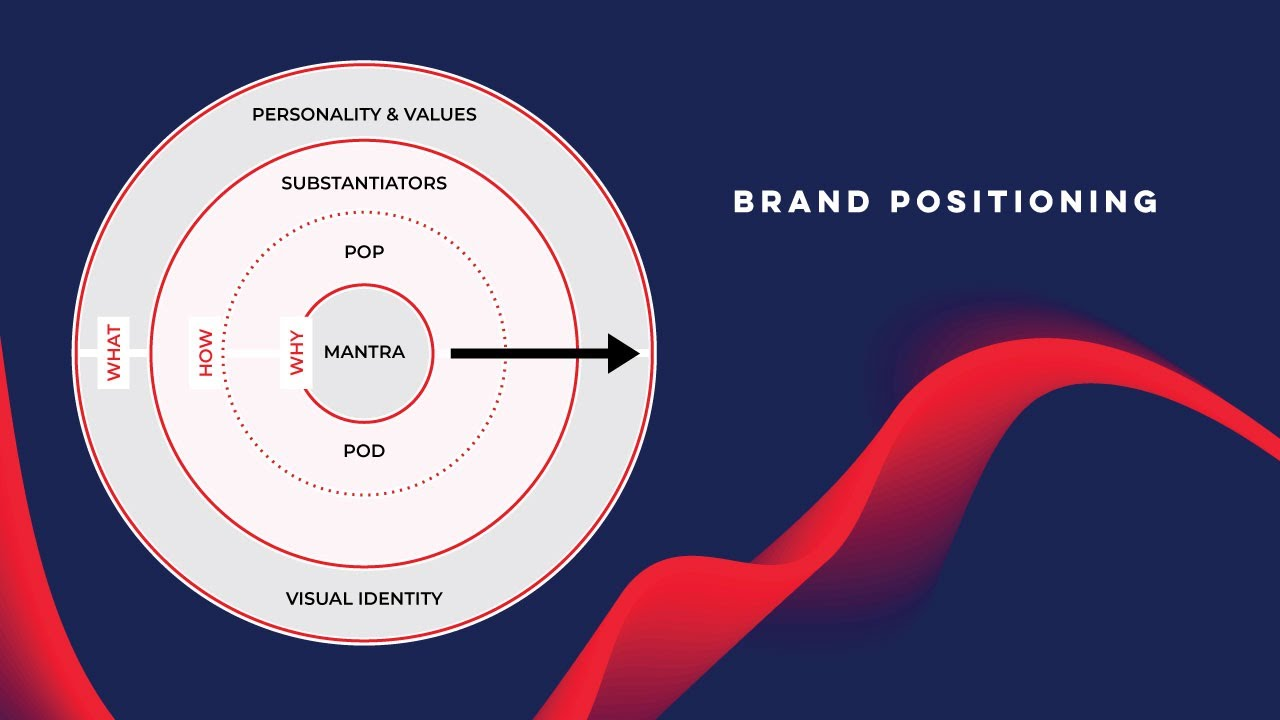

In a market economy, goods and services don’t always sell because of their functional attributes. Brand perception, trust, emotional attachment and brand value are all important factors that influence brand selection by customers. This is where brand positioning is a strategic business asset and not just a marketing exercise.
Some good examples of brand positioning demonstrate the ability of companies to create a unique brand identity that helps them stand out from the competition. Positioning in both local and international market terms impacts upon buying decisions, customer loyalty and the long term recognition of the business.
After analyzing numerous brand positioning examples through branding projects, one thing becomes evident. Businesses that prioritize positioning tend to have a more uniform visual identity, communication strategy, and customer experience.
Learning definitions is not enough to understand the use of position. Comprehending customer psychology, competitor analysis, and the business process behind professional branding services is essential for businesses.
How to Position a Brand?
Brand positioning’ is a strategy that involves determining the image a firm would like to give its brand or products in relation to its competitors.
Positioning is a strategy that goes beyond mere logo or visual design and influences:
- What the customer remembers about the brand.
- The significance of the company.
- The reasons for customers to prefer it over other choices.
- Who the brand is aiming towards.
In fact, the many good examples of positioning show that good positioning can drive clearness in the minds of consumers. It will be used as a basis for ongoing marketing, design, and communication decisions.
Definition and Core Concept
Brand positioning is a strategic approach to taking a unique place in the mind of the customer.
A company may position itself around:
- Premium quality
- Innovation
- Affordability
- Convenience
- Sustainability
- Customer experience
Effective brand consultants typically start by determining the market image a company wishes to project.
Why Positioning Matters in Competitive Markets
Modern markets are crowded. There are similar products with very similar features.
Without proper positioning:
- It’s difficult for customers to distinguish between brands.
- Marketing becomes inconsistent.
- Pricing power decreases.
- Customer loyalty is reduced.
Businesses that have a strong positioning are able to set a higher price and establish much more emotional connection with customers, as evidenced by strong brand positioning examples.
Difference Between Branding and Positioning
There is a large number of companies that mix up branding and positioning.
Brand Positioning:
- Expresses strategy pictorially and orally.
- Contains colours, typography, messaging and identity systems.
Positioning comes first. Branding follows.
Understanding the brand positioning Framework
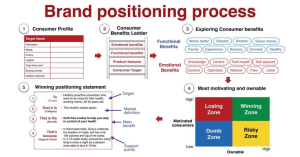
A professional brand positioning framework provides structure for creating consistent brand strategies. There are no assumptions when it comes to experienced branding agencies. Rather, they rely on research, analysis and documented processes. A complete brand positioning framework generally consists of four stages.
Target Audience Analysis
All positioning strategies start with the customer.
Key areas include:
- Demographics
- Buying behavior
- Pain points
- Expectations
- Emotional motivations
Even the most aesthetically pleasing brands fall short in engaging with their audiences if there is no audience analysis. This stage is one of the most important components of a professional brand positioning framework.
Market Research and Competitor Mapping
When you position, it can’t be done alone.
Professional teams evaluate:
- Direct competitors
- Indirect competitors
- Industry trends
- Pricing structures
- Customer preferences
There are a number of famous brand positioning case studies that successfully took advantage of the gaps that were left by their competitors. Competitor mapping can help businesses not get generic.
Value Proposition Development
A value proposition is a statement that illustrates why customers should buy one company over another.
Questions addressed include:
- What is the problem that the brand addresses?
- What is the company’s competitive advantage?
- What makes the business trustworthy to customers?
The value proposition is what becomes the overall brand positioning framework.
Brand Messaging Structure
Messaging transforms strategy into communication.
This includes:
- Brand voice
- Key statements
- Mission messaging
- Customer communication standards
Positioning without messages leads to confusion among websites, ads and social media.
Difference between Brand Positioning and Brand Promise
There are different ways for different industries. Recognizing the different kinds of brand positioning can support a company pick the positioning strategy that’s right for them.
Price-Based Positioning
This method emphasizes the cost and affordability aspect.
Examples include:
- Discount retailers
- Budget airlines
- Value-driven service providers
Price positioning is one of the types of brand positioning applicable in the case of high cost efficiency as the competitive advantage.
Quality-Based Positioning
Quality and craftsmanship are one way to compete in some businesses.
Customers expect:
- Reliability
- Premium materials
- Better performance
Many luxury companies represent strong brand positioning examples built around quality.
Convenience Positioning
Brands based on convenience focus on the ease of use and quickness.
Examples include:
- Delivery platforms
- Subscription services
- On-demand applications
These types of brand positioning are increasingly popular in digital industries.
Innovation Positioning
Technology companies frequently use innovation-based positioning.
They focus on:
- New ideas
- Advanced features
- Industry leadership
Innovation remains one of the strongest types of brand positioning for growing companies.
Customer Service Positioning
Some brands differentiate themselves through support and customer experience.
Advantages include:
- Faster response times
- Personalized service
- Long-term relationships
Professional service companies often adopt this approach.
Lifestyle Positioning
Lifestyle positioning puts brands in the shoes of their customers and their feelings.
Examples include:
- Fitness brands
- Luxury brands
- Fashion companies
These types of brand positioning create emotional loyalty rather than purely functional loyalty.
Brand positioning Examples From Real Companies
Studying successful brand positioning examples helps businesses understand practical implementation.
Apple
Apple positions itself around:
- Simplicity
- Innovation
- Premium quality
Its products and communication consistently reinforce this perception.
Nike
Nike focuses on:
- Performance
- Motivation
- Personal achievement
Its positioning extends beyond products and becomes part of customer identity.
Tesla
Tesla built its reputation around:
- Innovation
- Sustainability
- Future technology
Tesla is without a doubt one of the most compelling examples of a brand position today.
Coca-Cola
Coca-Cola positions itself around:
- Happiness
- Shared experiences
- Emotional connection
This approach demonstrates how positioning can transcend product features.
Professional Branding Service Workflow
Professional branding projects follow structured processes rather than subjective opinions.
Site Assessment and Branding Scope Definition
Before any design work begins, agencies evaluate:
- Business objectives
- Existing branding assets
- Market competition
- Audience requirements
This stage determines project scope and expected deliverables.
Brand Audit and Research
Brand audits identify:
- Visual inconsistencies
- Messaging weaknesses
- Market opportunities
This research phase forms the basis of the overall brand positioning framework.
Selection of Branding Services
Depending on project requirements, agencies may recommend:
- Brand Strategy Development
- Brand Identity Design
- Logo Design
- Social Media Branding
- Marketing & Advertising Design
The final service combination depends on business objectives and RFQ requirements rather than personal preferences.
Logo Design vs Brand Identity Design
One of the most common misconceptions in branding projects involves confusing logos with identity systems.
Logo Design
Focuses on:
- Symbols
- Wordmarks
- Brand marks
Brand Identity Design
Includes:
- Typography
- Color systems
- Visual guidelines
- Communication consistency
A logo is only one component of a complete identity system.
Cost vs Branding Quality
Branding quality often depends on research depth, expertise level, and project complexity.
Lower-cost projects typically involve:
- Limited research
- Fewer revisions
- Basic deliverables
Higher-level projects usually include:
- Market analysis
- Full identity systems
- Positioning documentation
- Brand guidelines
From practical experience, investing in proper strategy early reduces expensive rebranding efforts later.
Small Contracts vs Branding Agency Management
All branding projects are not built equal. A logo refresh may be all that’s needed for some firms, while others may need a full positioning strategy, identity system, and brand governance. To select the right delivery model, it is important to understand project scale.
Freelancers vs Agencies
Freelancers are typically good for:
- Small startups
- Limited budgets
- Single deliverables
Branding agencies are better suited for:
- Multi-department organizations
- Long-term projects
- Complex identity systems
- Multi-channel branding
Project complexity can make the difference between having to hire individuals or agencies for a procurement job.
Packaging Design Project Management
Packaging Design projects require coordination between:
- Branding teams
- Product teams
- Print vendors
- Marketing departments
Packaging projects are more complex than a simple logo project – they were loaded with technical specifications, regulatory requirements and production constraints. To ensure consistency, professional agencies sometimes have approval flows.
Scalability Considerations
A brand created for a small local company might go on to require:
- International expansion
- Additional products
- Multiple digital channels
Scalable branding systems provide for future growth without total redesigns. Scalability is part of many successful brand positioning examples, and it was a factor from the start.
Branding Services – Experts Level
Not every branding professional is an expert in branding.
Junior Designers
Junior professionals typically focus on:
- Graphic execution
- Basic layouts
- Simple visual assets
They are valuable for production tasks but may have limited strategic experience.
Senior Branding Specialists
Senior specialists combine:
- Research
- Strategy
- Design systems
- Brand consistency management
They understand both creative and business requirements.
Strategic Brand Consultants
Consultants work at the highest level and focus on:
- Market positioning
- Customer psychology
- Competitive analysis
- Long-term growth strategy
Their function is to not just design but also to be involved in business decisions.
The question is how do branding agencies make decisions? The question is how do branding agencies make decisions?
The professional agencies are not likely to make subjective recommendations. The great majority of decisions are made through a set of evaluation procedures.
RFQ and Quotation Evaluation
Agencies evaluate when considering requests for quotation:
- Scope of work
- Business goals
- Industry requirements
- Budget expectations
- Timeline constraints
This process determines the resources required for the project.
Vendor Selection Process
Procurement teams usually evaluate agencies based on:
- Portfolio quality
- Relevant industry experience
- Technical capability
- Communication processes
- Long-term support
These criteria minimise risks and enhance delivery quality of projects.
Scope Management Logic
One of the biggest causes of branding failure is uncontrolled scope expansion.
Professional agencies define:
- Deliverables
- Revision limits
- Approval stages
- Responsibilities
Clear scope management is a way to safeguard project timelines and budgets.
Quality Assurance and Continuous Improvement
Projects that are to be branded involve quality control as well as engineering projects.
Brand Consistency Checks
Consistency reviews ensure that:
- Colors remain standardized
- Typography is applied correctly
- Messaging follows guidelines
- Visual assets align with positioning
Consistency is a key component of customer trust.
Design Reviews and Approvals
Usually, professional workflows involve:
- Internal reviews
- Stakeholder approvals
- Revision cycles
- Final sign-off procedures
These steps minimize costly mistakes.
Performance Monitoring
Branding should be evaluated continuously through:
- Customer feedback
- Engagement metrics
- Market response
- Conversion performance
Brands can continually evolve without losing their identity by adopting the strategy of continuous improvement.
Common Brand Positioning Mistakes
Positioning mistakes do happen even in the best of companies!
Inconsistent Messaging
If an advertiser’s message doesn’t align with the website’s or social media’s, a customer is not going to be sure of what they want to do. For long-term recognition, consistency is key.
Copying Competitors
Very common mistake is to duplicate the success of other brands. The key to a successful brand positioning example is a unique one, and not one that copies other brands.
Weak Value Proposition
Positioning is a futile process if there is no reason for customers to select the business. Value proposition is key in all brand positioning models.
Define Your Company’s Mission and Vision. Identify Your Target Audience.
It’s important to have a clear process to establish an effective brand positioning framework.
Develop a Customer Persona Profile
Know demographics, behavior and customer needs.
Analyze Competitors
Conduct a strengths, weaknesses, and opportunity analysis.
Define Unique Value
Determine what differentiates the business.
Create brand messages
Establish tone, mission, and communication parameters.
Create Visual Identity
Create and execute a Brand Identity Design, Logo Design and supporting assets.
Cross Channel Application
Extend positioning into:
- Social Media Branding
- Marketing & Advertising Design
- Websites
- Packaging Design
This systematic approach forms the foundation of a successful brand positioning framework.

Expert Summary of Types of Brand Positioning
The most popular brand positioning strategies are:
- Price-based positioning
- Quality-based positioning
- Innovation positioning
- Convenience positioning
- Customer service positioning
- Lifestyle positioning
The best approach is based on:
- Industry conditions
- Target audience
- Competitive landscape
- Long-term business objectives
No one-size-fits-all solution. The placement should always be in line with the strategic objectives.
It’s not just about logos to create a successful brand. It starts with strategy, customer knowledge and a process that helps inform all communications decisions. The strongest brand positioning examples demonstrate how businesses create lasting competitive advantages through consistency and differentiation.
Understanding the various types of brand positioning allows organizations to select the approach that best matches their audience and market conditions. Likewise, implementing a professional brand positioning framework ensures that visual identity, messaging, and customer experience remain aligned over time. Ultimately, effective positioning transforms branding from a design activity into a long-term business asset.
FAQs
What are some successful brand positioning examples?
Some of the most recognized brand positioning examples include Apple, Nike, Tesla, and Coca-Cola. Each company focuses on a specific perception in the minds of consumers. Apple emphasizes innovation and premium quality, while Nike focuses on motivation and performance. Their consistency across products and communication channels strengthens customer loyalty. These examples demonstrate the power of strategic positioning.
What are the main types of brand positioning?
Common types of brand positioning include price-based, quality-based, convenience-based, innovation-based, customer service-based, and lifestyle positioning. Each model serves different industries and audiences. Businesses should select positioning strategies based on market conditions and competitive advantages. Choosing the wrong positioning can create confusion among customers. Proper research helps identify the best approach.
What is a brand positioning framework?
A brand positioning framework is a structured process used to define target audiences, value propositions, messaging, and competitive advantages. It helps organizations maintain consistency across all communication channels. Most professional branding agencies use frameworks to guide strategy development. This approach reduces subjective decision-making. It also improves long-term scalability.
What is the difference between Logo Design and Brand Identity Design?
Logo Design focuses on a single visual mark representing the business. Brand Identity Design covers the complete visual ecosystem, including typography, colors, design standards, and brand guidelines. A logo alone cannot establish a complete brand experience. Identity systems ensure consistency across all platforms. Both services serve different but complementary purposes.
How often should companies update their brand positioning?
Positioning should not change frequently. However, companies should periodically review customer behavior, industry trends, and market changes. Minor adjustments may be necessary as businesses grow. Major repositioning usually occurs when entering new markets or changing products. Regular evaluation helps maintain relevance.
Why do branding projects require quality assurance?
Quality assurance ensures consistency throughout all brand assets. Reviews help identify errors in messaging, design, and implementation. Without quality control, different departments may communicate conflicting information. Consistency strengthens trust and professionalism. Continuous monitoring protects brand value over time.
Why is brand positioning important for business growth?
Positioning helps businesses differentiate themselves from competitors. It improves customer recognition, strengthens trust, and supports premium pricing strategies. Strong positioning also creates consistency across marketing channels. Over time, this contributes to long-term customer loyalty and sustainable growth. Businesses with clear positioning generally make better strategic decisions.