
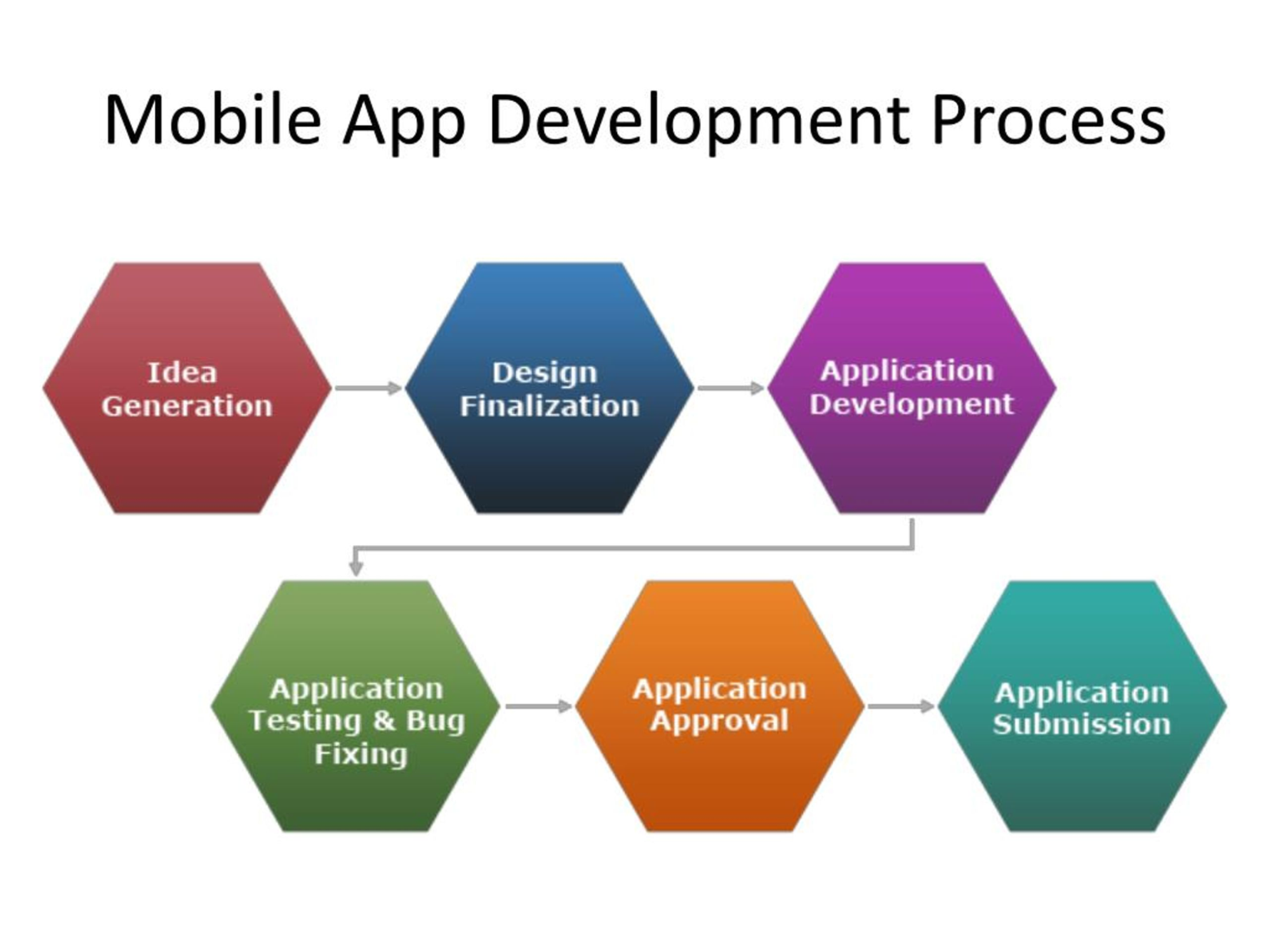

The app development process is an engineering-controlled system that is not a coding task
In a professional world, mobile app development is not looked upon as ‘building an app.’ It is considered as a controlled engineering lifecycle where the business logic and user behaviour, system architecture, UI/UX design, and backend infrastructure need to play in harmony within an operational discipline.
The majority of app failures aren’t because of the lack of coding expertise. They come from:
- Incorrect requirement interpretation
- Poor design in system architecture.
- Bad UI/UX separation and development logic
- Failure to have QA governance and inspection discipline.
- Failure to have iteration-based improvement cycles.
The successful mobile app is like a managed production system:
- Inputs are validated (requirements)
- Processes are under control (dr. design + development)
- Outputs are checked (QA)
- The system is constantly enhanced after release (post-release analytics).
This guide walks you through the Mobile App Development Process step-by-step and explains how agencies manage the entire Mobile App Development Process from planning to deployment.
Understanding the Mobile App Development Process before coding begins is essential for building scalable and reliable applications
Apps Are Behavioral Systems, NOT screens
A UI collection is not a mobile application. It is a behavioral run time system.
Each action within an app is:
- A user intent
- A system response
- A backend validation
- A data state change
If all of these layers are misaligned, it fails.
Every successful Mobile App Development Process consists of several core technical layers working together. There are several layers of a Mobile App that are core technical
The Frontend Layer (User Interface Execution) is the second layer. The second layer is the Frontend Layer (User Interface Execution)
- Developing UI logic for Android Applications. Logics for Android App Development.
- iOS App Development UI logic
- Navigation structure
- Screen state management
Infrastructure Layer (Technical Implementation)
- Produce plans for apps and requirements analysis.
- User journey mapping
- Interaction flow design
Backend Layer (System Logic)
- APIs and services
- Authentication systems
- Data processing engines
The infrastructure layer is known as the scalability backbone
- Cloud deployment
- Load balancing
- Database optimization
Incompatibility in any of the layers results in instability in the system.
Step-by-Step Mobile App Development Process (Industrial Workflow)
Mobile App Development Process: Site Assessment and Requirement Scope Definition
This is the most important, like structural inspection before building.
Activities performed
- Business requirement extraction
- Market and competitor mapping.
- An existing system audit (if available)
- To validate the user behavior assumptions.
Output
- Product Requirement Document (PRD)
- Scope boundary definition is a feature that defines the scope boundary.
- Technical feasibility report
Decision logic used
Teams determine:
- What are the elements that are essential vs. optional?
- Within budget what can be delivered
- What should be omitted from the system to prevent overloading the system?
The risk of failure if not addressed
- Scope creep
- Broken architecture assumptions
- Unscalable system design
In this stage, the requirements are gathered to create a functional app. In this stage of the Mobile App Development Process, requirements are collected to build a working application
This step translates business intent into a structured system logic.
Key components
- Include modules in features.
- User story mapping
- API requirement listing
- Data flow structuring
Internal alignment
- This is directly related to
- Conducted App Planning & Requirement Analysis services.Performed App Planning & Requirement Analysis services.
- where raw business goals are turned into engineering-ready specifications through professional Mobile App Development Services.
Why this matters
Without structured planning:
- Developers create unconsistent modules.
- APIs become fragmented
- The UI/UX disconnects from the back-end logic.

In this stage, the behavioral perspective shifts to the UI/UX design of the apps Mobile App Development Process: UI/UX Design for Apps
This stage is a translation from logic to interaction design.
Core activities
- Wireframing all screens
- User flow mapping
- Interaction state design
- UI system structuring
Integration point
- Closely aligned with
- UI/UX Design for Apps / UI Design / Android App Development UI systems
- Critical principle:
- UX is the behavior of users. UI is what makes systems look, feel and behave.
Failure consequence
- Confusing navigation structure
- High abandonment rates
- Enhanced support and user complaints.Improved support, user complaints.
Mobile App Development Process: Technology Stack Selection and Architecture Design
This is the stage in the engineering back-bone decision process.
Key decisions
- Native Android (Kotlin / Java)
- Native iOS (Swift)
- Cross-platform (Flutter / React Native)
- The data in the stack were stored in the back end of the application (Node.js, Java, .NET)
Architecture types
- An architecture that consists of monolithic applications (simple apps).
- The scalable systems are built using microservices architecture.The scalable systems are made using the microservices architecture.
Why architecture matters
An incorrect architecture results in:
- Failure to scale with high load volumes
- High server cost
- Difficult maintenance cycles
Mobile App Development Process: Android Development Execution Phase
This is place where real implementation starts.
Responsibilities
- Feature coding
- API integration
- Local data handling
- UI logic implementation
Engineering discipline used
- Modular development
- Clean architecture principles
- Separation of concerns
Common failure pattern
- When developers do not follow the Architecture discipline:
- The coupling of code becomes tight.
- Existing flows are broken when they encounter feature updates.
- Debugging becomes expensive
Mobile App Development Process: iOS Development Execution Phase
In iOS development, there are more rules to follow in the ecosystem.
Key constraints
- Apple’s usability/design requirements.
- Memory optimization requirements
- The terms of approval for the App Store.
Engineering focus
- Performance stability
- UI responsiveness
- Device compatibility control
Real-world observation
iOS apps typically take longer to get through QA cycle because iOS enforces the ecosystem.
An important stage of the Mobile App Development Process involves integration and API synchronization. The last stage is system integration and API synchronization
This phase is used to link the frontend with the backend.
Activities
- API integration testing
- Authentication flow implementation
- Data synchronization mapping
Critical failure point
- If the APIs are not well integrated:
- Login systems are expected to fail periodically. Login systems can fail at times.
- Data mismatch occurs
- App behaves unpredictably
Mobile App Development Process: Quality Assurance and Inspection System
QA is not a last step, it is a continuous inspection system.
QA layers
Functional QA
- Feature correctness validation
- Flow testing
Performance QA
- Speed benchmarking
- Memory usage monitoring
Device QA
- Testing of the following OS versions: W8, W8.1, W10, and W10S.
- Screen compatibility checks
Security QA
- Data encryption validation
- API vulnerability scanning
Why Failures in QA are important
Even the slightest defects in production result in:
- User churn
- Negative ratings
- Revenue loss
Mobile App Development Process: Continuous Improvement & Release Management
Mobile apps are continuously evolving.
Monitoring inputs
- Crash logs
- User analytics
- Heatmaps
- Retention metrics
Output actions
- Feature updates
- UX improvements
- Performance optimization
Reality
- No matter how effective an app is at first, it will suffer over time if it is not constantly updated.
Operational Discipline: System Failures and Control Logic
Dilution of Development Standards – Improper (Engineering Weakening)
In the professional engineering world “dilution” means lowering standards to do it cheaper or faster.
What will happen if standards are lowered:
- The quality of the code becomes very poor
- Technical debt accumulates
- When loaded, the system is unstable.
Real consequence:
- A single poorly-designed module can cause failures to cascade throughout the system architecture.
Prevention:
- Enforcement of strict coding standards.
- Architecture governance reviews
- All peers required to conduct code reviews.
A Dwell Time of less than 3.2 seconds in Testing Cycles
Dwell time is the amount of time that features spend in testing before they are released.
If dwell time is too short
- A variety of hidden bugs make the way to production.
- App crashes increase
- User trust declines
When the dwell time is too long
- Business velocity slows
- Competitive delay increases
Balanced approach
- Risk-based testing strategy
- Include criticality-based QA depth
Cost vs Quality in the Mobile App Development Process
A cost-effective development model is being employed. Use of a low-cost development model
- Faster delivery cycles
- Template-based architecture
- Limited QA depth
Risk
- A high ongoing maintenance expense.
- Limited scalability
High Quality Development Model
- Custom architecture design
- Improved coverage of the QA lifecycle.
- Scalable backend systems
Benefit
- Long-term stability
- Lower failure probability
Development Frequency Impact
- Frequent updates improve system health
- If your website isn’t updated regularly, it is subject to technical decay.
Application Development Environment
UI/UX Layer
- Behavior design
- Flow structuring
- Interface planning
Development Layer
- System implementation
- Backend integration
- Feature execution
Core principle
Design defines intention. Execution realty is defined through development.
The Value of a Bookkeeper
Small contracts
- Feature-based execution
- Limited system ownership
- Short-term delivery focus
Limitation
- Fragmented architecture growth
- No optimization cycle is taking place in the long term.
Full agency management
- End-to-end system ownership
- Continuous improvement cycles
- Architecture governance
Benefit
- Predictable scalability
- Reduce overall risk of the system in the long term
How to put in place a Risk Management Plan. 9. What and How to do it
Senior engineers evaluate:
Scalability capacity
Is there the capacity for the system to scale to serving 10x the number of users?
Architecture complexity
Are there loose or tight coupling?
Backend load sensitivity
Will APIs be the limiting factor?
Maintenance cost prediction
What is the cost of LTO?
These decisions will help to decide if:
- You need to have development skills and knowledge of your native language.
- Using a cross-platform approach is OK.
- Or hybrid architecture is needed

Mobile App Development Process as a Controlled Engineering Lifecycle
The Mobile App Development Process is not linear. A successful Mobile App Development Process requires structured planning, UI/UX design, backend architecture, QA governance, and continuous improvement. This is a multi-stage engineering system, that includes structured planning, UX mapping, UI execution, backend architecture design, QA governance and continuous improvement cycles.
Successful Mobile App Development Services deliver applications based on:
- Precise requirement definition
- Strong architecture decisions
- Rigorous QA/Inspection procedures in place
- Iterative process driven by actual user interactions.
If such controls are not in place, even well-funded applications will fail in the real world.
FAQs
What is the most important stage of the Mobile App Development Process?
Requirement analysis and scope definition is the most critical part. This stage defines the capabilities of the app and what it won’t be able to achieve. Without good definition, there will be faulty architecture and flawed development cycles. In the workplace, this is viewed as a preliminary step for all other technical decisions. If it is incorrect, all the later stages carry forward the problems that are present in it.
What is the reason to do UI/UX design even before coding?
Before development, UI/UX design makes decisions on how users will interact with the system. It helps make workflows coherent and consistent with the users’ habits. If UX design is not incorporated, the developers might end up with technically correct, but unusable systems. Also it minimizes rework due to early validation of interaction logic. This means cost and stability of the product is saved.
In the real world, what are the reasons for mobile app projects failing?
Typically, it is a result of the lack of planning, a lack of good architecture decisions and a lack of testing cycles. Another significant reason is the rush of development without adequate QA validation. This results in unstable applications being released. Also contributing to system failures is the lack of communication between the design and development groups.
How is it that agencies decide to choose between Android and iOS?
Agencies study their target audience’s behavior, budget and market strategy. Android is considered first if the market is dominated by Android users. If a premium engagement is needed, iOS might be preferred. In several instances, both platforms are built concurrently based on business objectives and resources.
What is the role of QA in the Mobile App Development Process?
QA guarantees that this application will perform as expected in real-world conditions. It certifies attributes, capacity, compatibility, and security. QA ensures that bad products are not released to customers. If there is no QA, applications can crash or exhibit unpredictable behavior. It is a vital part of the development lifecycle as a risk control.
Mobile apps can feel sluggish after updates due to several reasons. There are a few reasons why mobile apps may feel slow after updates. Unoptimized code, added features and misused memory management cause app slowness. The more updates are added, the more load put on the system. With non-scalable architecture, over time its performance will suffer. To be able to maintain stable performance the code should be optimized and refactored.
How often should the Mobile App Development Process include app updates?
Frequency of updates is related to the activity of the user and the complexity of the system. The apps that are used often need frequent updates, such as every month or even bi-weekly. These bug fixes, performance and improvements are related to those enhancements. But each update has to undergo QA cycles, and be free of instability. It is a continuous iteration process that is necessary for long term success.