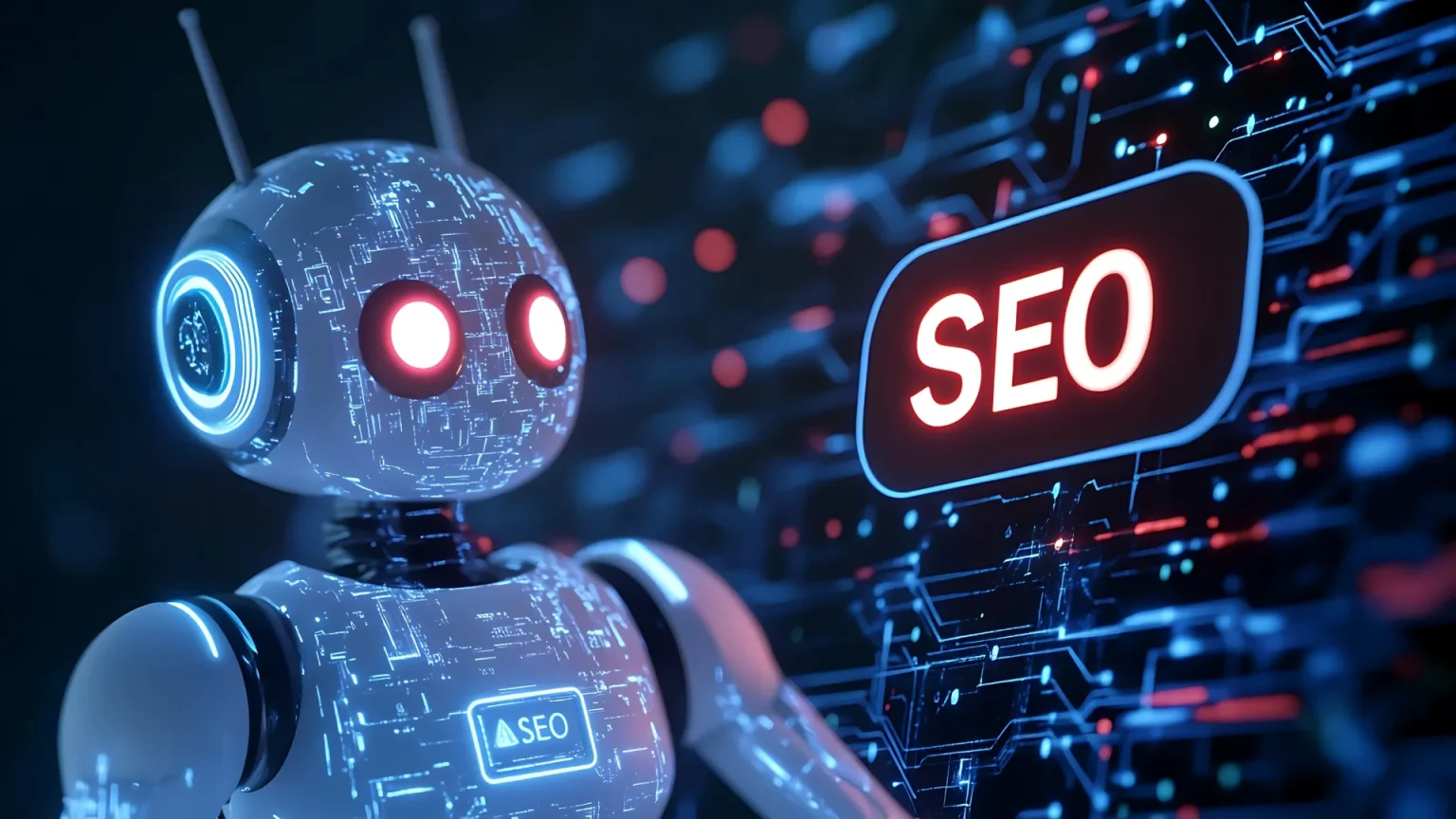

There have been significant changes in the world of SEO in the past couple of years. SEO in 2026 is far more complex than it was in the past, primarily because it is no longer just about keywords, backlinks and conventional ranking factors. AI has become a significant factor in search engines’ ability to comprehend content, decipher query intent, and provide responses. Today, AI is a major component of understanding content, user intent, and providing answers to search queries.
Therefore, AI SEO has emerged as one of the most significant advancements in digital marketing. AI, semantic understanding, and conversational search experiences are shaping the Future of SEO, prompting businesses, SEO agencies, and content teams to adjust their strategies accordingly.
A lot of businesses still think that it is all about writing articles and obtaining links. In reality, modern AI SEO is a structured system involving:
- Search intent analysis
- Entity optimization
- Topical authority development
- Technical SEO implementation
- User experience improvements
- Structured data and schema
- Continuous performance analysis
Top-notch SEO services now favor not just ranking, but other aspects. They are all about visibility on the AI-powered search ecosystems.
By implementing a successful AI SEO strategy, businesses can benefit in the following ways:
- Improve organic visibility
- Increase authority
- Capture intent of the user better.
- Generate qualified traffic
- Familiarize yourself with the new AI-powered search experiences. Get comfortable with the new AI search experiences.
- Build long-term scalability
Poor SEO practices create:
- Traffic instability
- Weak rankings
- Low conversion rates
- Poor user engagement
- Reduced authority
- Difficulty competing in AI search environments
This guide will help you understand what AI SEO is, why it’s the Future of SEO, and how pro SEO services are adapting to the new search environment.
Understanding AI SEO Fundamentals
What Is AI SEO?
AI SEO is the process of leveraging artificial intelligence principles, machine learning comprehension, and semantic optimization strategies to enhance the visibility of your content in today’s search engines.
The traditional focus of SEO was on:
- Keywords
- Exact-match phrases
- Link quantity
- Basic technical optimization
Modern AI SEO focuses on:
- User intent
- Context
- Entity relationships
- Content quality
- Topical depth
- Experience signals
More and more, search engines look at meaning, not words. This change has taken the SEO from a keyword game to a content quality and relevance system.
Artificial Intelligence has transformed search engines in many ways
The search engine has come a long way.
Previous algorithms were heavily based on:
- Keyword density
- Anchor text
- Exact matching
- Link volume
Today’s AI algorithms analyze the following:
Context
Search engines try to figure out what the person really wants to know not just what the person types.
Relationships Between Topics
AI finds relationships between concepts and entities.
User Behavior
Search systems monitor:
- Click-through rates
- Dwell time
- Engagement patterns
- Bounce rates
Search Intent
AI determines whether users are trying to:
- Learn information
- Compare products
- Make purchases
- Solve problems
This evolution represents the Future of SEO because search engines now behave more like answer engines than traditional indexing systems.
Why AI SEO Matters in 2026
The importance of AI SEO continues to grow because search behavior itself is changing. Users increasingly expect:
- Faster answers
- Personalized experiences
- Conversational interactions
- Contextual results
- Accurate information
Businesses that ignore AI search optimization often experience:
- Traffic decline
- Reduced rankings
- Lower conversions
- Difficulty competing
In that regard, the AI SEO strategy development is now a part of professional SEO services as they are given in return to content that shows:
- Experience
- Expertise
- Authority
- Trustworthiness
The Future of SEO is one of the sites that deliver value and not just keywords.
Traditional SEO vs AI SEO
While traditional SEO is still relevant, there are some differences with modern day AI SEO.
Traditional SEO
Focused primarily on:
- Keywords
- Backlinks
- Meta tags
- Technical fixes
AI SEO
Focuses on:
- Search intent
- Topic relationships
- User experience
- Entity optimization
- Content depth
- Semantic relevance
Traditional SEO asks:
“Which keywords should we rank for?”
AI SEO asks:
“What problems are users trying to solve?”
This difference explains why AI SEO strategy has become essential for modern websites.
The Future of SEO and Search Behavior
Search Is Becoming Conversational
Individuals don’t look for single words or phrases anymore.
Instead of typing:
- SEO tips
Users now search:
- So, what are the best ways to use AI tools for SEO in 2026?
- AI takes care of comprehending such natural language queries within search engines.
- This has affected the way content is written.
Successful AI search optimization focuses on:
- Question-based content
- Topic coverage
- Clear explanations
- User intent satisfaction
User Intent Is More Important Than Keywords
One of the biggest changes in the Future of SEO is the growing importance of intent. Search engines classify intent into several categories.
Informational Intent
Users want knowledge.
Example:
- What is AI SEO?
Commercial Intent
Users compare options.
Example:
- Best AI SEO tools
Transactional Intent
Users are ready to purchase.
Example:
- Professional SEO services
Navigational Intent
Users want a specific website.
Example:
- Google Search Console
The intent categories are what professional SEO services create content around, not just keywords.
Semantic Search is changing the game of rankings
The semantic search is a way for search engines to understand meaning.
AI can identify connections between:
- SEO
- Content marketing
- Backlinks
- Technical optimization
- User experience
Because of this, content must cover topics comprehensively. Publishing shallow articles often produces weak results.
Modern AI SEO strategy prioritizes:
- Topic clusters
- Entity relationships
- Content depth
- Supporting subtopics
This approach helps establish topical authority.
Zero-Click Search Results
Search engines increasingly provide answers directly inside results pages.
Examples include:
- Featured snippets
- AI summaries
- Knowledge panels
- FAQ sections
This creates new challenges. Businesses must optimize content not only for rankings but also for visibility inside AI-generated responses.
AI search optimization now involves:
- Structured formatting
- FAQ sections
- Schema markup
- Concise explanations
- Entity clarity
The Future of SEO will increasingly reward websites that help AI systems understand information easily.
Core Components of an AI SEO Strategy
Professional AI SEO strategy consists of several integrated systems.
Search Intent Mapping
Content should align with what users actually need.
Intent mapping helps determine:
- Which keywords matter
- Which pages should exist
- What are questions to be asked
With no intent mapping, content can fall flat even if it has great SEO.
Topical Authority Development
Search engines prefer websites that demonstrate expertise. Whereas professional SEO services produce content ecosystems rather than just one-off articles.
For instance, a website that focuses on SEO may discuss:
- On-page SEO
- Technical SEO
- AI SEO
- Link building
- Keyword research
- Local SEO
This comprehensive approach strengthens authority.
Entity Optimization
AI systems of today are able to recognise entities and not only simple keywords.
Here are some examples of entities:
- Brands
- Products
- Industries
- Technologies
- People
- Services
Entity optimization improves:
- Relevance
- Understanding
- Context
- Search visibility
Content Quality
AI cannot reward low-quality content indefinitely.
High-performing content demonstrates:
- Accuracy
- Originality
- Expertise
- Practical experience
- Clear explanations
Content quality is a key part of effective SEO services, as it has a direct impact on the long-term performance.
Internal Linking
Internal links aid search engines to understand:
- Page relationships
- Topic clusters
- Site structure
- Content importance
Strong internal linking improves:
- Crawling efficiency
- User navigation
- Authority distribution
In the realm of AI SEO strategy, internal links are not just a secondary consideration but a core component of a structured system.
Structured Data and Schema
Schema markup assists search engines to better understand content.
Common schema types include:
- Article schema
- FAQ schema
- Organization schema
- Breadcrumb schema
- Service schema
Structured data is more and more crucial for AI search optimization as machine learning systems need clearly defined information.
The future of AI SEO in search.
Ranking pages is not the only factor of the Future of SEO.
The modern search systems focus on:
- Understanding
- Context
- Relevance
- Experience
- Authority
- User satisfaction
Businesses that adapt early will benefit from:
- Greater visibility
- Improved traffic quality
- Better conversions
- Stronger authority
AI SEO is not the replacement of SEO. It’s making SEO more of a science rather than an art.
The future of SEO service delivery hinges on the capabilities of AI Search Optimization
No longer does the Future of SEO rely on article publishing and waiting for ranking. Today’s SEO companies work within a regulated framework featuring content engineering, technical checks, AI search optimization, building authority, and ongoing performance tracking. Professional SEO services are offered in stages and not just a one-off job.
Site Assessment and SEO Scope Definition.
Any professional SEO company will do a complete analysis prior to any SEO efforts.
This stage evaluates:
- Website architecture
- Existing rankings
- Traffic sources
- Technical errors
- Content quality
- Competitor performance
- Backlink profile health
Outputs include:
- SEO audit report
- Keyword opportunity map
- Competitor analysis
- Priority action list
Without assessment, campaigns often fail because problems are treated incorrectly.
Why Scope Definition Matters
Professional teams determine:
- Which pages require optimization
- Whether technical SEO is necessary
- Whether content gaps exist
- Which backlinks are harmful
- Which keywords have commercial intent
Without scope control:
- Budgets become unpredictable.
- Tasks become duplicated.
- Teams lose direction.
- ROI decreases.
Selection of SEO Services
Not every website needs identical SEO solutions.
Professional agencies select services according to:
Technical SEO
Used when websites suffer from:
- Crawl errors
- Slow speed
- Indexing issues
- Duplicate pages
On Page SEO
Used when:
- Content quality is weak.
- Search intent is mismatched.
- Keywords are poorly optimized.
Off Page Services
Applied when:
- Domain authority is low.
- Competitors have stronger backlink profiles.
- Trust signals are weak.
Backlinks Services
Used to:
- Increase authority
- Improve rankings
- Strengthen topical relevance
Digital Marketing Integration
SEO increasingly works alongside:
- Content marketing
- UI/UX improvements
- Conversion optimization
- Brand positioning
The integration is an example of the “Future of SEO,” which values search visibility based on overall user experience.
On Page SEO (On site optimization) vs Off Page SEO (Off site optimization)
On page and off page optimization is one of the most confused terms in the search engine optimization process.
On Page SEO
Focuses on elements inside the website.
Includes:
- Content optimization
- Internal linking
- Metadata
- Heading structure
- Search intent alignment
- User experience improvements
Benefits
- Full control
- Immediate implementation
- Better relevance
Off Page SEO
Focuses on external authority signals.
Includes:
- Backlinks services
- Brand mentions
- Digital PR
- Authority building
Benefits
- Improved trust
- Increased domain authority
- Competitive advantage
Reality
The Future of SEO requires both. Strong content without authority struggles to rank. Strong authority without content creates poor user satisfaction. The highest-performing websites combine both systems.
AI SEO Strategy and Content Engineering
Modern AI search engines analyze:
- Expertise
- Context
- User satisfaction
- Entity relationships
- Semantic depth
Because of this, a successful AI SEO strategy focuses on:
Search Intent Matching
Content should answer:
- Informational intent
- Commercial intent
- Navigational intent
- Transactional intent
Entity Optimization
AI systems understand relationships between topics.
For example: SEO connects with:
- Content marketing
- Digital marketing
- User experience
- Conversion optimization
- Backlinks
The better these relationships are structured, the stronger AI understanding becomes.
Topical Authority
Instead of publishing isolated articles, agencies build content ecosystems.
Example: Main Topic:
Future of SEO
Supporting topics:
- AI SEO strategy
- AI search optimization
- On page SEO
- Technical SEO
- Backlinks services
- Digital marketing
This creates stronger semantic relevance.
Quality Assurance in Professional SEO Services
SEO is not complete after publishing. Professional agencies perform continuous inspections.
Content QA
Checking:
- Keyword placement
- Heading structure
- Search intent alignment
- Internal links
- Readability
Technical QA
Checking:
- Crawlability
- Core Web Vitals
- Indexing
- Mobile responsiveness
Backlink QA
Reviewing:
- Link quality
- Toxic domains
- Anchor diversity
Analytics QA
Monitoring:
- Traffic trends
- Click-through rates
- Bounce rates
- Conversion metrics
Without inspections:
- Rankings become unstable.
- Errors accumulate.
- Performance declines.
Continuous Improvement in the Future of SEO
Search engines constantly evolve. Therefore SEO requires ongoing optimization.
Continuous Improvement Activities
- Updating content
- Adding new information
- Improving internal links
- Expanding topic clusters
- Replacing outdated statistics
- Monitoring algorithm changes
Websites that stop improving gradually lose visibility. This continuous evolution represents the real Future of SEO.
Cost vs SEO Quality
Businesses frequently compare cheap SEO with professional SEO services.
Low-Cost SEO
Usually includes:
- Automated content
- Weak backlinks
- Minimal audits
- Generic reports
Risks
- Penalties
- Poor rankings
- Unstable growth
High-Quality SEO
Includes:
- Research
- Technical audits
- AI search optimization
- Content engineering
- Quality backlinks services
- Continuous reporting
Benefits
- Long-term traffic
- Better conversions
- Sustainable rankings
Cheap SEO often becomes expensive later.
Small Contracts vs Full SEO Agency Management
Different businesses require different service levels.
Small SEO Projects
Include:
- Single-page optimization
- Blog updates
- Minor technical fixes
Advantages
- Lower costs
- Faster execution
Limitations
- Limited scalability
- Fragmented improvement
Full SEO Agency Management
Includes:
- Strategy development
- Technical SEO
- Content planning
- Off page services
- Analytics monitoring
- Reporting systems
Benefits
- Long-term growth
- Better scalability
- Higher efficiency
Professional organizations increasingly prefer integrated SEO systems because this reflects the Future of SEO.
Expert-Level Decision Making
Search Intent Complexity
Questions include:
- Are users informational?
- Are users transactional?
Competition Levels
Questions include:
- Are competitors authoritative?
- Is the keyword realistic?
Scalability
Questions include:
- Can content expand into clusters?
- Can authority increase over time?
Revenue Potential
Questions include:
- Does traffic generate leads?
- Will rankings support business goals?
These factors determine:
- Whether technical SEO is required.
- Whether backlinks services are needed.
- Whether digital marketing integration is necessary.
Scalability in AI Search Optimization
Modern SEO campaigns are designed for growth.
Scalable systems support:
Additional Content
Without rebuilding the entire strategy.
New Services
Without losing relevance.
Geographic Expansion
Supporting local and international audiences.
Algorithm Changes
Adapting to future updates. Ignoring scalability is one of the biggest threats to the Future of SEO.
Procurement Logic Used by Businesses
Procurement teams rarely choose agencies solely by price.
They evaluate:
Experience
Can the team handle complex SEO campaigns?
Process Quality
Do they follow repeatable systems?
Reporting Standards
Can performance be measured?
Long-Term Value
Will results remain stable?
Scalability
Can campaigns grow with the business? Professional SEO services are increasingly judged by operational discipline rather than promises.
The Future of SEO Is AI-Driven and Experience-Focused
The Future of SEO is moving away from keyword stuffing and toward behavioral understanding, semantic relevance, and AI search optimization.
Successful websites:
- Build topical authority.
- Improve user experience.
- Maintain technical health.
- Use structured AI SEO strategy.
- Continuously optimize performance.
Professional SEO services no longer focus only on rankings. They focus on creating systems that generate sustainable visibility, authority, and long-term business growth.
FAQs
What is the Future of SEO in 2026?
The Future of SEO focuses on AI systems that understand context, entities, and user behavior rather than relying only on keywords. Search engines increasingly prioritize expertise, topical authority, and user satisfaction. Websites that continuously improve content and technical quality are more likely to succeed. SEO is becoming more data-driven and experience-focused. Long-term optimization is replacing short-term ranking tactics.
What is an AI SEO strategy?
An AI SEO strategy is a structured approach that optimizes content for AI-driven search engines. It combines semantic relationships, user intent analysis, topical authority, and content quality. Instead of targeting isolated keywords, it builds complete topic ecosystems. This approach improves visibility across both traditional and AI-generated search experiences.
What is AI search optimization?
AI search optimization is the process of improving content so AI systems can understand meaning, context, and relationships between topics. It focuses on entities, structured information, and helpful content. AI search engines reward pages that provide clear and comprehensive answers. This method supports future search trends and improves discoverability.
Is on page SEO more important than off page SEO?
Both are important. On-page SEO improves relevance and user experience, while off-page SEO strengthens authority and trust. A website with strong content but no authority may struggle to rank. Similarly, backlinks alone cannot compensate for weak content. Professional SEO combines both systems.
Why do SEO campaigns require continuous improvement?
Search algorithms, competitors, and user behavior constantly change. Content that performs well today may decline in the future. Continuous optimization helps maintain rankings, improve user satisfaction, and adapt to algorithm updates. Regular improvements are a core part of professional SEO services.
Are backlinks still important in the Future of SEO?
Yes. High-quality backlinks remain one of the strongest authority signals. However, relevance and quality matter more than quantity. Spam links can harm performance. Modern backlinks services focus on authority, trust, and natural acquisition rather than mass link building.
How do businesses choose professional SEO services?
Businesses evaluate experience, process quality, reporting standards, scalability, and long-term value. Agencies that provide structured workflows and measurable improvements are preferred. Procurement teams increasingly prioritize sustainable growth instead of short-term ranking promises.