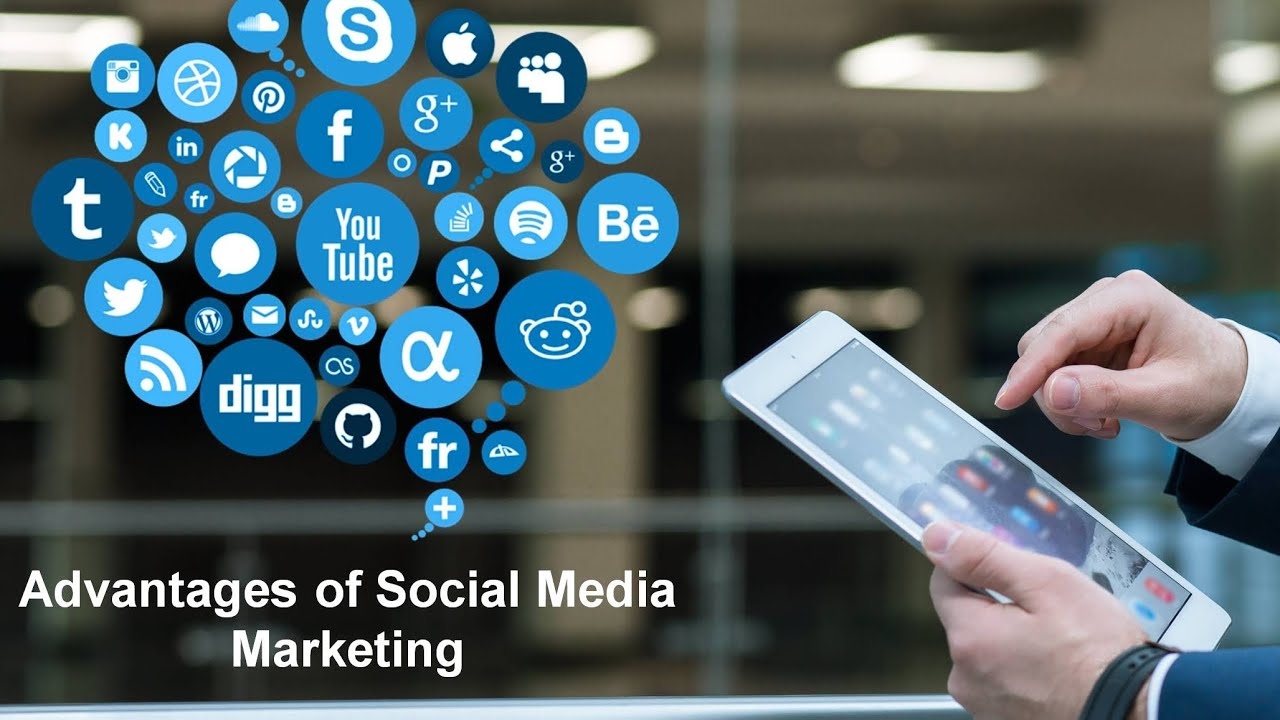

Benefits of Social Media Marketing for Businesses: Why Social Media Has Become a Core Business System
One of the biggest benefits of social media marketing for businesses is that it has evolved from an optional promotional activity into a core growth system. It will operate in 2026 as a structured business system directly impacting revenue, brand trust, customer acquisition and long-term retention.
On a professional level, SMM does not simply consist of posting content. It represents a highly synchronized ecosystem consisting of audience research, behavioural analytics, content engineering, paid media systems and ongoing optimization loops.
Those businesses that are cognisant of this change are shifting out of posting on social media into the operation of a performance-based digital communication infrastructure. Those that do not, tend to have poor consistency of reach, poor engagement and poor stability in lead generation. This article explains the key benefits of social media marketing for businesses from an industrial and decision-making perspective.
Core Benefits of Social Media Marketing for Businesses in Modern Markets
The social media platforms serve as online marketplaces in which the attention is the major currency.
SMM in business terms fulfils four extremely important functions:
Attention Acquisition System
Social applications such as Instagram, Tik Tok, Facebook, LinkedIn and X are designed to share content according to their engagement indicators. SMM is an entry point into this attention ecosystem by businesses.
Trust Building Layer
As opposed to conventional advertisements, social media fosters trust, and repeated exposure, storytelling, and social proof are the three fundamental elements of social media.
Conversion Enablement Channel
Contemporary SMM can be easily integrated with funnels like:
- Lead generation forms
- Website traffic campaigns
- E-commerce product conversions
- WhatsApp or CRM connections.
Feedback Intelligence System
Any communication is information:
- What audience prefers
- What content fails
- What messaging converts
Physical Advantages of Social Media Marketing to Business.
One of the most important benefits of social media marketing for businesses is predictable and scalable brand visibility.
Scalable Brand Visibility that is predictable.
Contrary to the organic offline marketing, the social media enables the management of the visibility scale by using content distribution and paid amplification.
Businesses gain:
- Daily audience exposure
- Geographic targeting control
- Demographic segmentation
This is more so in competitive markets where market share depends on visibility.
Another major benefit of social media marketing for businesses is precise audience targeting.
High-Precision Customer Targeting
The social media platforms can also be targeted on the basis of:
- Interests
- Behavior
- Purchase intent signals
- Location
- Device usage patterns
This saves on squandered marketing budget and also enhances conversion rates.
Among the top benefits of social media marketing for businesses is measurable lead generation.
Easily quantifiable Lead Generation Systems.
In contrast to the traditional branding practice, SMM does deliver quantifiable outputs:
- Cost per lead (CPL)
- Click-through rate (CTR)
- Conversion rate (CVR)
- Return on ad spend (ROAS).
This causes it to be a performance based marketing channel as opposed to guesswork.

Economical in comparison to the traditional media.
TV, print and outdoor advertising involves substantial initial investments.
SMM allows:
- Flexible spending
- A/B testing budgets
- Gradual scaling
- Performance-based optimization
Improved customer communication and retention are significant benefits of social media marketing for businesses.
Direct Customer Communication and Retention.
Social media enables:
- Real-time customer support
- Community building
- Re-engagement campaigns
This goes a long way in enhancing customer lifetime value (CLV).
Market Authority and Competitive Positioning.
Businesses which have regular social presence are seen as:
- More reliable
- More established
- More relevant
This is particularly imperative in the saturated industries.
The way Professional Social Media Marketing Services are provided (Step-by-Step)
Professional SMM services are organized based on operational principles that are similar to an engineering workflow.
Assessment of Site and Social Media Account.
This is the diagnosis stage. Experts evaluate:
- Current social profiles
- Branding consistency
- Content history
- Engagement metrics
- Audience demographics
Output:
An analysis of performance gaps and a performance baseline report.
Scope Definition and Alignment of Business Goal.
This stage identifies the meaning of success. Examples:
- Increase in lead generations by 30 percent.
- E-commerce sales growth
- Brand awareness expansion
- Audience engagement improvement
This step is without which the campaigns are rendered directionless.
Competitor mapping and Audience Research.
Professionals analyze:
- Competitor content strategies
- Posting frequency
- Ad strategies
- Engagement patterns
Audience segmentation includes:
- Age groups
- Behavioral clusters
- Purchase motivations
Strategy Architecture Development
This is the blueprint step. Includes:
- Content pillars
- Posting schedules
- Platform prioritization
- Ratio of paid and organic.
- Funnel structure design
Content Creation System
The content is created in well-organized formats:
- Educational content
- Promotional content
- Storytelling content
- User-generated content
- Short-form video content
Here the professional Social Media Marketing services (Content Creation) are directly linked with execution.
Paid Advertising Setup
Paid campaigns are organized in:
- Awareness campaigns
- Traffic campaigns
- Conversion campaigns
- Retargeting campaigns
This is combined with [Paid Advertising services
Key elements:
- Pixel installation
- Conversion tracking
- Audience building
- Budget allocation logic
Community Management and Engagement.
This includes:
- Comment moderation
- Inbox responses
- Reputation management
- Crisis handling
Analytics, Reporting, and Optimization.
Key KPIs:
- Engagement rate
- Conversion rate
- Cost per acquisition
- Return on ad spend
Optimization occurs on weekly or monthly basis based on the size.
Quality Assurance, Inspections and Continuous Improvement.
In the industrial grade agencies, QA is not an option. It includes:
- Content audits
- Ad performance audits
- Funnel leakage analysis
- A/B testing cycles
Important Operational Parallel: Process Control Discipline
In multi-service agencies, in addition to the operational hygiene or compliance systems, QA discipline occasionally adopts systematic ideas, adopted by sanitary industries.
For example:
Dilution ratios (conceptual equivalent in SMM): ratios of budget allocations between awareness, engagement and conversion campaigns.
Dwell time: The time taken before the content or campaigns stabilize and optimization decisions are made.
So what is the effect when there are incorrect ratios of dilution?
In case of an improper distribution of the budget:
- Excessive use of awareness costs decreases conversions.
- Excessive investment in retargeting restricts growth of reach.
- Campaigns lack stability and become inefficient.
What occurs when the concept of dwell time is not taken into account?
In case campaigns are prematurely optimized:
- Learning phase cannot be stabilized with the help of algorithms.
- The performance data becomes not reliable.
- The cost is also inflated with untimely adjustments.
This field is akin to the operational systems in which untimely interference leads to failure cycles.
Logic of Decision-Making that Agencies and Procurement Teams Use.
Professional customers assess the SMM services according to the systematic ones:
Performance Predictability
Will the agency be able to provide results consistently?
Scalability
Are they able to cope with larger budgets and audiences?
Resource Allocation Efficiency
To what extent is budget allocated effectively through channels?
Risk Management
What is the response to failures (ad disapprovals, content drops, algorithm changes)?
Reporting Transparency
Do metrics exist, are traceable, and are actionable.
The Trade-offs that we have in Social Media Marketing are Cost vs Quality vs Frequency Trade-offs.
Low Budget Approach
- Limited content
- Minimal paid ads
- Slow growth
- Very reliant on organic reach.
Mid Budget Approach
- Balanced content production
- Regular paid campaigns
- Sustainable growth
High Budget Approach
- Full-funnel marketing
- Dedicated creative teams
- Continuous testing cycles
- Advanced analytics
The most important principle is:
A higher frequency without quality results to audience fatigue whereas a high-quality without frequency results to invisibility.
Creation of Content vs Paid Advertising.
Content Creation
Strengths:
- Long-term brand equity
- Organic trust building
- Low marginal cost
Limitations:
- Slow scaling
- Algorithm dependency
Paid Advertising
Strengths:
- Immediate reach
- Predictable scaling
- Precise targeting
Limitations:
- Requires continuous funding
- Ad fatigue risk
The combination of the two is found in professional systems.
Small Contracts vs Agency-Scale Management.
Small Contracts
- Independent workers or micro agencies.
- Limited reporting depth
- Narrow platform coverage
Agency-Scale Management
- Cross-platform coordination
- Dedicated specialists
- Advanced tracking systems
- Structured QA processes
When the level of performance risk is high, procurement teams are usually transferred to agencies.
Scalability and Expert Levels in the field of Social Media Marketing.
Beginner Level
- Posting content
- Basic captions
- No structured analytics
Intermediate Level
- Content strategy
- Basic paid ads
- Engagement tracking
Expert Level
- Full funnel design
- Conversion optimization
- Multi-platform integration
- Data-driven scaling systems
SEO Combination with Social Media Marketing.
Social media indirectly enhances SEO by:
- Brand searches
- Backlink generation
- Traffic signals
- Content indexing
SMM used in conjunction with SEO turns out to be a demand generation engine as opposed to a visibility tool.
Conclusion
In 2026 social media marketing is a business system and not a promotional activity. Its efficiency relies on the discipline in operations, allocation of budgets correctly, content engineering as well as continuous optimization.
Companies that consider SMM a system realize:
- Stable lead pipelines
- Strong brand positioning
- Predictable growth
The ones that approach it as a mere posting of content usually record inconsistency of performance and low ROI.
FAQ’s About the Benefits of Social Media Marketing for Businesses
What is the primary business advantage with social media marketing?
Marketing through social media is mainly useful in assisting business in creating scalable visibility and predictable customer acquisition systems. It enables brands to target extremely targeted groups, based on their behavioral and interest data. In contrast to the traditional media, the performance can be estimated in real time by using analytics. It also reinforces the trust by exposing and involving. In the long run, this enhances conversion rates and retention of the customers. The net effect is an organized channel of growth as opposed to haphazard marketing exposure.
What is the point of both creation of content and paid advertising by the business?
Organic engagement facilitates the creation of trust and brand authority over time with regard to content creation. Paid advertising is a quicker method of reaching, and guarantees instant exposure in competitive markets. By itself, each method has some limitations on scalability or speed. Integrated systems enable companies to manage the short term performance and long term shareholding. This integration also enhances funnel operations at various customer levels. All professionals always develop campaigns with two elements.
What would occur when the social media campaigns are prematurely optimized?
The problem of early optimization interferes with the learning process of ad platforms. This causes inconsistent performance data and inaccurate information. Algorithms take time to test reactions of the audience and stabilize delivery. The high rate of change causes the cost per result to increase and efficiency to diminish. Complete learning cycles can make campaigns fail to scale appropriately. Before making optimization decisions, it is necessary to have proper dwell time.
What is the process of the agencies in determining the budget allocation in social media marketing?
Performance data, business goals, and audience behavior are used as a tool by agencies. Budgets are categorized into segments of awareness, engagement and conversion. Each segment is used in another way in the customer journey. Continuous monitoring will give the determination of whether reallocation is required. Past campaign information also affects budget forecasting. The aim is to achieve maximum on ad spend and managed risk.
What is the distinction between small contracts and complete agency management?
Small contracts are generally concerned with simple posting of content or limited advertisement. They are not very analytic and organized optimization systems. Agency management consists of full funnel strategy and performance tracking. It is also characterized by specific content, ads, and analytics teams. This enhances scalability and operational risk is minimized. Companies select agencies when they need to expand to the system level.
So what is the importance of social media marketing to small businesses?
The low cost of reaching a large audience and targeting a particular audience is advantageous to small businesses. It enables them to compete with bigger brands with specific targeting. Trust is built quicker through social media as compared to other advertising media. It also facilitates contact with the customers. This enhances the retention and word-of-mouth expansion. All in all, it offers an entry point into the digital marketing that is scalable.
What are the metrics of businesses when it comes to social media marketing?
KPIs such as engagement rate, CTR, and conversions are used to measure success. Key financial indicators are cost per acquisition and the return on ad spend. The increase and retention rates in the audience indicate the strength of the brand in the long run. Performance measurement tools are performance trackers that monitor performance by platform in real time. Frequent reporting will guarantee transparency and optimization. The making of decisions is founded on facts and not speculations.