
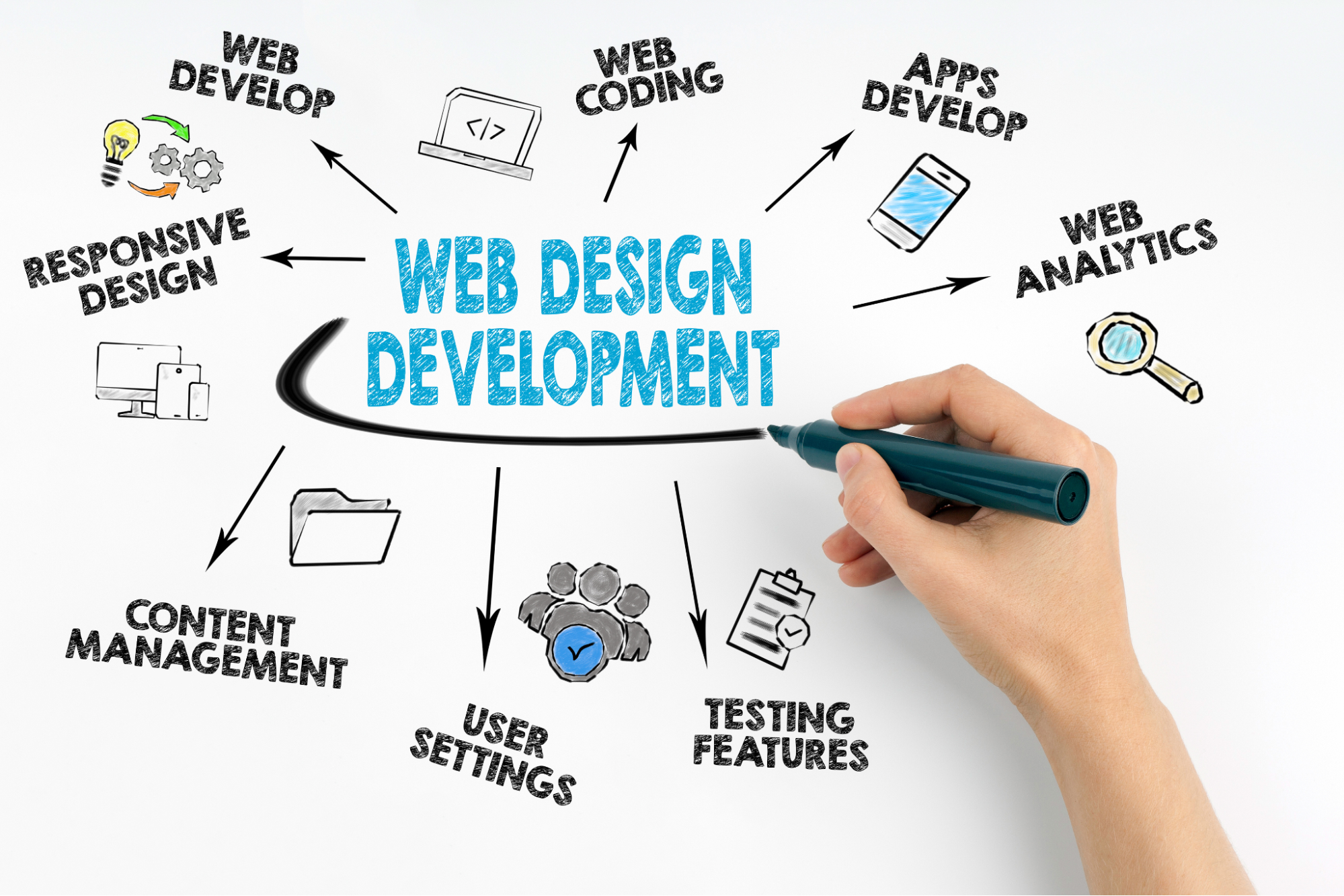

Creating a new site is not just about coding. To build a successful website, you need to plan, design, implement, test, and maintain the site, continuously. This whole process is referred to as the website development process and it is an important factor that helps decide on the quality of the website, its scalability and the performance of the website in the long run also.
No matter what the project being pursued is, be it a corporate website, eCommerce, or a custom web application, a structured approach can help businesses stay clear of unnecessary delays, budget overruns, and technical problems.
Once you’ve done a little bit of web front-end work and been involved in several website projects, it becomes clear that one thing is true. Companies with a documented web development workflow are more likely to create a better user experience and avoid issues when the site goes live.
Business owners, procurement teams and development agencies must be aware of the various stages of a website’s development process, as each impacts timelines, costs, and project success.
This guide explains the complete website development process used by professional website development services from planning to quality assurance.
What Is the Website Development Process?
The website development process is a step-by-step approach that helps to convert the website requirements into a working website.
Pros are better able to break down development into stages and do so with a plan for ensuring:
- Better planning
- Improved quality control
- Predictable timelines
- Efficient collaboration
- Easier scalability
It involves designing, front-end development, back-end development, content creation, and testing in a cohesive manner.
Definition and Purpose
The purpose of the website development process is to ensure that websites are developed to meet business goals and also hold a level of usability, security and performance. Standardized workflows are used by professional development teams as they help minimize project risks and facilitate communication between stakeholders.
The need for a structured process for businesses.
A lack of methodology often leads to projects falling short in the following ways:
- Scope changes
- Delayed delivery
- Budget increases
- Technical inconsistencies
- Poor user experiences
A documented web development workflow allows teams to identify problems early and maintain project control.
Common Goals of Website Development
Most website projects focus on:
- Brand visibility
- Lead generation
- Product sales
- Customer support
- Information delivery
The exact goals influence the complexity of the overall website development process.
Stages of Website Development Explained
Major stages of website development are an understanding that will help organization to allocate its resources efficiently.
Planning and Requirement Gathering
All of the successful projects begin with the requirement analysis.
In this stage teams determine:
- User expectations
- Technical requirements
- Content requirements
- Budget limitations
This stage provides the foundation for the remaining stages of website development.
Site Assessment and Scope Definition
Professional website development services begin by evaluating:
- Existing websites
- Competitor websites
- Technical limitations
- Functional requirements
- Expected deliverables
When developing a scope definition, it helps to avoid misunderstandings later on in the project
In this lesson, students will learn to create a sitemap and understand the principles of information architecture.
Information architecture determines:
- Navigation structure
- Page hierarchy
- User pathways
- Internal linking strategy
Creating a well-designed sitemap enhances the usability and search engine optimization.
Wireframing and Website Design (UI/UX) is an H3 level course.
User Experience and Interface structure is the focus of Website Design (UI/UX).
This stage includes:
- Wireframes
- Layout planning
- User journey mapping
- Visual hierarchy
Professional teams often create prototypes before starting development.
Content Planning
Content planning determines:
- Page topics
- Headings
- Calls to action
- SEO structure
Content should be planned before development because it affects layout decisions. These activities are among the most important stages of website development.
Web Development Workflow Used by Professional Agencies
Professional agencies rely on a documented web development workflow to ensure consistency and quality.
Discovery Phase
The discovery phase focuses on understanding:
- Business goals
- Industry challenges
- Target audiences
- Competitor strategies
This information guides future development decisions.
Technical Documentation
Before coding begins, agencies prepare documentation covering:
- Features
- Functional specifications
- Development priorities
- System architecture
Documentation reduces confusion during implementation.
Resource Allocation
Projects require different specialists, including:
- UI/UX designers
- Frontend developers
- Backend developers
- Content specialists
- QA engineers
Resource allocation is a critical component of the web development workflow.
Timeline and Milestone Planning
Professional teams divide projects into:
- Milestones
- Sprints
- Deliverables
- Review phases
This structure improves accountability and project tracking.

Selection of Website Development Services
Not all projects require the same technical solutions. Professional agencies select services based on project scope and RFQ requirements.
Professional Website Development Services
Comprehensive development services typically include:
- Planning
- Design
- Development
- Testing
- Maintenance
The exact combination depenThe precise mix will vary from business to business.
Website Design (UI/UX)
Designing a website (UI/UX) is the key to how users engage with your site. Key responsibilities include: ds on business objectives.
Website Design (UI/UX)
Website Design (UI/UX) determines how users interact with the platform. Key responsibilities include:
- User experience optimization
- Visual consistency
- Navigation design
- Accessibility improvements
Frontend Development
Frontend development deals with all the elements of the website that the user can see and interact with.
Typical responsibilities include:
- Layout implementation
- Responsive design
- Interactive elements
- Performance optimization
From practical experience, frontend quality significantly affects user engagement.
Backend Development
Backend development handles:
- Databases
- Server logic
- Authentication systems
- APIs
- Security functions
Without reliable backend systems, even visually impressive websites cannot operate effectively.
CMS Development
CMS Development provides content management capabilities.
Popular systems include:
- WordPress
- Shopify
- Joomla
- Drupal
CMS solutions simplify future updates and maintenance.
Frontend vs Backend Development
A common question that clients tend to ask is what is the difference between frontend and backend development?
Frontend Development Responsibilities
Frontend developers manage:
- User interfaces
- Responsiveness
- Navigation
- Visual interactions
Their work is directly related to user experience.
The roles and responsibilities of Backend Development
Backend developers focus on:
- Databases
- Business logic
- Server operations
- System integrations
Their work ensures reliability and functionality.
The importance of both working together
The collaboration of frontend and backend teams is vital to successful websites. Both surfaces are not able to operate separately.
Balanced development improves:
- Performance
- Security
- Scalability
- User satisfaction
Development Phase Step by Step
The implementation phase transforms planning into a functioning website.
Frontend Coding
Frontend developers convert designs into responsive interfaces using:
- HTML
- CSS
- JavaScript
Performance optimization begins during this stage.
Backend Integration
Backend systems are connected to:
- Databases
- User accounts
- APIs
- Payment systems
This integration enables functionality.
CMS Configuration
CMS Development involves:
- Plugin installation
- Theme configuration
- User role setup
- Content structures
Proper configuration simplifies long-term management.
Database Setup
Database planning determines:
- Data relationships
- Performance optimization
- Security controls
Well-designed databases improve scalability.
API Integration
Modern websites often integrate:
- Payment gateways
- CRM systems
- Analytics platforms
- Third-party applications
API planning is increasingly important in today’s website development process.
Quality Assurance and Testing
Quality assurance is one of the most important stages of website development because errors discovered after launch are often more expensive to fix.
Functional Testing
QA teams verify:
- Forms
- Buttons
- Navigation
- System functionality
Responsive Testing
Websites are tested across:
- Mobile devices
- Tablets
- Desktops
Responsive performance directly impacts user experience.
Performance Testing
Performance testing evaluates:
- Loading speed
- Resource optimization
- Server response times
Slow websites negatively affect SEO and conversions.
Security Checks
Security testing includes:
- Vulnerability analysis
- Authentication reviews
- Access controls
Security should never be an add-on.
The quality of website development compared to its cost. The quality of website development against its cost
There is definitely a significant factor in the depth and quality of a website project and that’s budget. But not all lower prices are indicative of a better value. After working in the industry, one knows that the main criterion of businesses is the evaluation of their deliverables, not only on the basis of their prices.
The budget is the major concern on deliverables
Lower budget projects may have:
- Limited revisions
- Basic functionality
- Fewer custom features
- Minimal documentation
Higher-budget projects generally provide:
- Custom development
- Better UI/UX planning
- Advanced integrations
- Extensive testing
The quality of the overall website development process depends heavily on the resources allocated to each stage.
Frequency of Website Updates
Websites are not static assets. Regular updates may include:
- Content improvements
- Plugin updates
- Security patches
- Performance optimization
The update frequency will depend on the complexity and requirements of the website.
Maintenance Costs (long term)
Many organizations underestimate costs of continuing operations. Maintenance costs commonly involve:
- Hosting
- Technical support
- Backup systems
- Security monitoring
- CMS updates
One of the key factors of a sustainable site is long-term planning.
Managing small contracts vs website development agency management
Not all projects need enterprise level management. The ways resources are organized depends on the size of the project.
Freelancers vs Agencies
Freelancers are often suitable for:
- Small websites
- Limited budgets
- Basic functionality
Agencies are usually better for:
- Multi-page websites
- Custom systems
- Complex integrations
Long-term maintenance
It doesn’t only rely on the size of the company; it can be selected based on project needs.
Managing Large Projects
Large projects require:
- Project managers
- Technical leads
- QA specialists
- Frontend developers
- Backend developers
Proper coordination reduces risks and improves delivery quality.
Scalability Considerations
Scalable websites can support:
- Traffic growth
- Additional features
- Future integrations
- Multi-location expansion
Ignoring scalability during the website development process often creates expensive problems later.
Expert Levels in Website Development Services
Development teams usually consist of professionals with different experience levels.
Junior Developers
Junior developers typically handle:
- Minor updates
- Basic coding tasks
- Content adjustments
They contribute to execution but usually work under supervision.
Senior Developers
Senior developers manage:
- Architecture decisions
- Complex features
- Technical troubleshooting
- Code quality
Their experience significantly influences project success.
Solution Architects and Technical Leads
These professionals focus on:
- Scalability
- System design
- Security planning
- Technology selection
Large organizations often rely on technical leads to guide the entire web development workflow.
How Website Development Agencies Make Decisions
Professional agencies rarely make decisions based on assumptions. Instead, they rely on structured evaluation processes.
RFQ Evaluation Process
When reviewing quotations, agencies examine:
- Project scope
- Functional requirements
- Timelines
- Budget limitations
- Integration requirements
This analysis determines resource allocation.
Scope Management
Clear scope management defines:
- Deliverables
- Responsibilities
- Revision limits
- Milestones
Proper scope control prevents project delays.
Vendor Selection Logic
Procurement teams commonly evaluate:
- Technical expertise
- Portfolio quality
- Communication capabilities
- Previous experience
- Support availability
These criteria help organizations reduce project risks.
Aim to implement continuous improvement and maintenance. Pursue continuous improvement and maintenance
The website development process does not end with the launch of the website. There is a need for continuous optimization to keep performance up.
The Council will monitor and update this policy
Regular monitoring can be used to identify:
- Broken links
- Performance issues
- Security vulnerabilities
Downtime is reduced with preventive maintenance.
Performance Optimization
Performance improvements may involve:
- Image compression
- Code optimization
- Caching systems
- Database cleanup
High-speed websites are better for both search engine optimization and user experience.
Security Maintenance
Security activities include:
- Plugin updates
- Malware scanning
- Backup management
- Access control reviews
Security should remain an ongoing priority.

Here are some common Web Design Errors that you should avoid?
Many businesses encounter problems because they underestimate the complexity of the website development process.
Poor Planning
Lack of planning leads to:
- Scope changes
- Budget overruns
Planning remains one of the most critical stages of website development.
Ignoring Scalability
Eventually a website that can’t expand with the business needs redevelopment. Consideration of scalability needs to be given from the outset.
Weak Testing Procedures
Skipping quality assurance increases the risk of:
- Functional bugs
- Security problems
- Poor user experiences
Testing protects both businesses and users.
Expert Summary of the Website Development Process
Building a website is a complex process that can be broken down into several interdependent steps.
Effective projects are based on:
- Planning
- Website Design (UI/UX)
- Frontend Development
- Backend Development
- CMS Development
- Testing and maintenance
A well-defined website development process enables organizations to create and deliver higher quality websites, while minimizing risks and enhancing scalability. The different phases of the website development cycle help businesses make better investments and communicate with development teams.
Creating a successful website isn’t just about code. It is a process of planning, collaboration, quality assurance and continuous improvement. The website development process acts as a roadmap, directing every aspect of the project, from the initial idea through to its final launch and beyond.
Similarly, professional web development work guarantees uniformity, accountability and predictable results. Understanding the major stages of website development allows businesses to manage costs more effectively, reduce technical risks, and build platforms that support long-term growth.
From practical experience handling frontend development services, one fact remains clear. Websites built with structured processes consistently outperform projects developed without clear planning and quality control.
FAQs
What are the stages of website development?
The major stages of website development include planning, requirement gathering, UI/UX design, frontend development, backend development, testing, deployment, and maintenance. Each stage serves a specific purpose and contributes to the overall quality of the website. Skipping any phase can create technical issues later. Professional agencies follow these stages to ensure predictable outcomes. Structured workflows reduce risks and improve efficiency.
What is a web development workflow?
A web development workflow is the sequence of processes used by teams to manage website projects. It includes planning, documentation, coding, testing, and maintenance. Workflows help teams coordinate responsibilities and maintain quality standards. They also improve communication between stakeholders. Most professional website development services rely on documented workflows.
How long does the website development process take?
The duration depends on project complexity, features, and approval cycles. Simple websites may require a few weeks, while complex platforms can take several months. Requirement changes also influence timelines. Proper planning helps prevent delays. Accurate estimates depend on clear project specifications.
What is the difference between frontend and backend development?
Frontend development focuses on the visual interface users interact with. Backend development manages databases, servers, and business logic. Both areas work together to deliver a complete website experience. Frontend affects usability, while backend ensures functionality and reliability. Neither component can operate effectively without the other.
Why is quality assurance important in website development?
Quality assurance helps identify functional errors, security vulnerabilities, and performance issues before launch. Testing protects user experience and reduces maintenance costs. Professional QA procedures improve reliability and customer satisfaction. Continuous inspections also support long-term website performance. Ignoring testing can lead to expensive corrections later.
Should businesses hire freelancers or agencies?
The answer depends on project size and complexity. Freelancers are suitable for smaller projects with limited requirements. Agencies provide larger teams, broader expertise, and better scalability. Businesses should evaluate deliverables rather than focusing only on price. Long-term support requirements also influence the decision.
Why do companies use professional website development services?
Professional website development services provide expertise, structured workflows, and quality assurance processes. Experienced teams can manage technical complexity more effectively. They also help businesses avoid costly mistakes and improve scalability. Professional services ensure websites align with long-term business objectives. This approach generally produces more reliable and maintainable platforms.