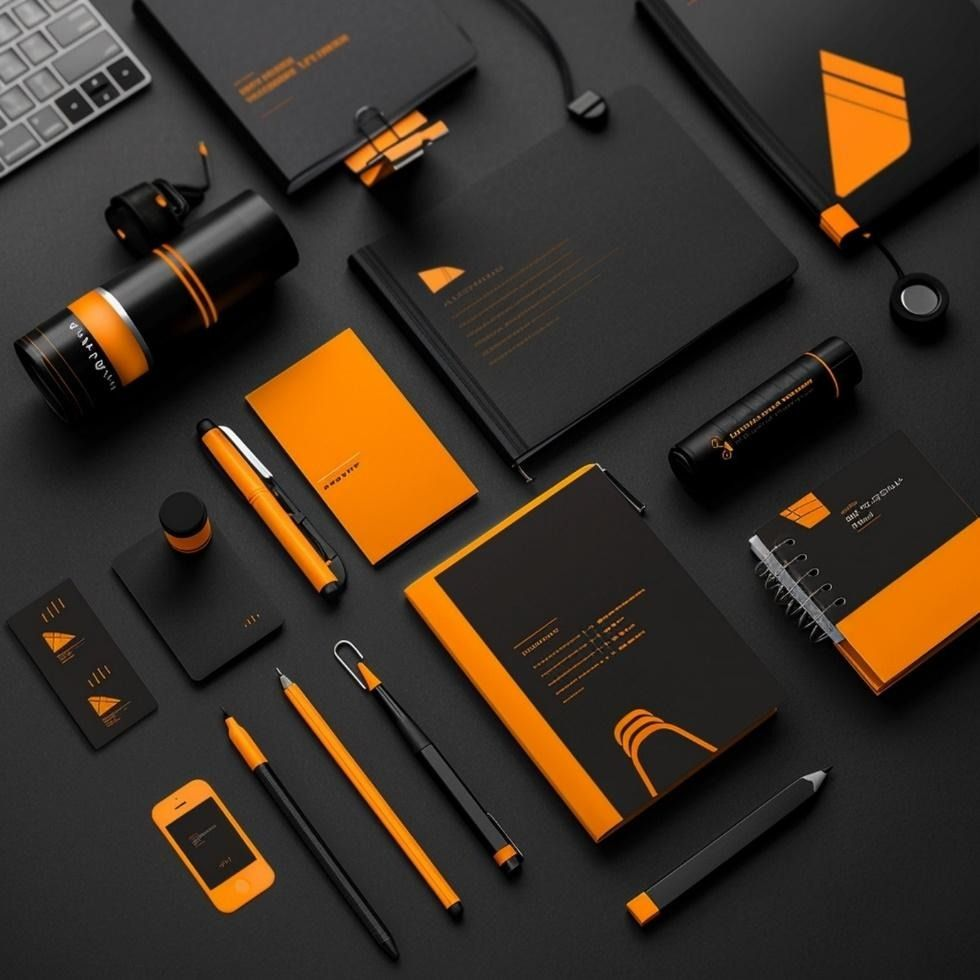

This Field-Level, Agency Practice Guide offers a practical and accessible approach to real-world branding strategy and execution that is both applicable and actionable.
Rather than being merely a logo, a colour scheme or a memorable slogan, branding is defined by a combination of all three. In the real working world it is a system of perception management and its impact on income, trust, conversion rate and Market positioning.
The three main Types of Branding used in professional business environments are:
- Personal Branding
- Corporate Branding
- Product Branding
They each have different psychology, working and business principles. There are also varying degrees of strategy depth, creative execution, governance and performance tracking needed for each of these.
This article explains not only what these types of branding are but also how you can get this type of branding from a professional branding agency, such as audits, scope definition, identity systems, quality control and long-term brand governance.
Is to understand the branding concept as a system – it is not only the design.
It is essential to grasp the operational definition of branding before breaking it down into types.
There is no one-size-fits-all branding solution. It is a multi-layer system, where it comprises:
- Customer life cycle (how the customer journey progresses after the initial purchase)
- Data system and quality (its data capabilities and quality)
- The presence of suitable cues such as images and text. Appropriate voice (communicating across platforms)
- Be consistent in its behaviour (across interactions)
- Future prospects for the company (growth, decay, or stability)
Within an agency context, branding is used as an infrastructure project and not a creative one.
This is why branding projects typically consist of:
- Market and competitor audit
- Audience segmentation mapping
- Brand positioning definition
- The setting up of a visual identity system design.
- Messaging framework development
- Platform implementation including UI Design, packaging and Social Media Branding & Brand Strategy Development
There are various types of branding in professional practice. There are multiple kinds of branding in professional practice.
Developing a personal brand (individual market position)
Among the major Types of Branding, Personal Branding focuses on positioning an individual as a recognized market authority. It is common for:
- CEOs and founders
- Freelancers and consultants
- Influencers and creators
- Public speakers, industry experts
Strategic Purpose of Personal Branding
The goal is not for looks. It’s about positioning.It’s about authority positioning.
Having a strong personal brand does the following:
- Increased confidence in sales interactions
- No need for capital-intensive infrastructure to compete with other truck manufacturers
- Increased inbound opportunities
- Authority-based pricing power
Professional Process for Personal Branding Development
Personal branding in agency execution usually goes in phases:
Identity and Positioning Audit
This phase evaluates:
- A professional history and credibility markers.
- Industry positioning gaps
- Audience perception mismatch
- Competitor personal brands
Brand Scope Definition
This defines:
- The personality trait which the person is known for.
- What topics they should not be discussing
- Their job role (SEO expert, designer, strategist, etc.)
Messaging Architecture
Includes:
- Personal bio frameworks
- The author’s tone of voice, or the attitude she projects toward her subject.
- Social media marketing strategies (content marketing, audience engagement, social media optimization, and more)
Visual Identity System
This is not as intense as corporate branding, but it is more lightweight and structured:
- Profile image standards
- The posts are consistent with the typography.The posts have consistent typography.
- Content templates for social platforms
This is frequently done in conjunction with UI Design principles throughout LinkedIn, portfolios and personal websites.
Channel Implementation
Personal branding is used on:
- YouTube
- Personal portfolio websites
There are some common mistakes made in personal branding. Personal branding has got some common failures.
Inconsistent Messaging
When people transition from one topic to another that is not related, algorithmic authority is removed.
Over-Design Without Strategy
Positioning clarity is needed for high-quality visuals to turn into opportunities.
The absence of a Proof System.Lack of Proof System.
Low trust with no case studies or evidence.
Corporate Branding (Organizational Identity Systems)
Among the different Types of Branding, Corporate Branding is often the most complex because it influences the perception of an entire organization. It affects the image of an entire organization through various channels, departments and markets.
The strategic role of corporate branding is explained. The use of corporate branding for corporate purposes is explained.
The purpose of corporate branding is to:
- Establish a lasting relationship with the company itself. Foster long-term trust of the company itself.
- Establish internal culture in congruence with external perception
- Provide investor and procurement confidence
Ensure consistency of departments and products
Industrial Branding Delivery Process.
Professional agencies have a systematic model for their operation.
The first step involves a brand environment assessment, also known as a corporate audit. The first is a brand environment assessment or a corporate audit.
It’s like a diagnostic step, in industrial systems.
It includes:
- Market positioning analysis
- Competitor bench-marking
- Customer perception research
- Internal brand alignment interviews were conducted.
This is the step where there are gaps between a company’s self-perception and market perception.
In this step, the scope for the brand is defined. In this step, the scope of the brand is defined.
This defines:
- The role of the brand in the company’s product lineup. Brand architecture (single brand vs multi-brand system)
- Communication hierarchy
- Sub-brand relationships
- Target audience layers
The development of the Visual & Identity System.
Corporate branding includes:
- Logo Design system
- Color psychology frameworks
- Typography systems
- Brand grid systems
- Integrate digital UI Design.Embed digital UI Design.
The logo doesn’t get the job done. Agencies develop a complete identity system which expands across:
- Websites
- Applications
- Packaging Design
- Marketing materials
Establishing a brand across channels becomes a channel strategy. Brand implementation across channels turns into a channel strategy.
Corporate branding should be applied in all of the following:
- Internal HR communication
- External marketing campaigns
- Product interfaces
- Social media platforms
- Investor presentations
This is where Social Media Branding & Brand Strategy Development comes in to play.
Quality Assurance in Corporate Branding
Whereas, branding quality is measurable with:
- The choice of platforms are consistent with the consistency audits.
- Visual compliance checks
- Tone consistency scoring
- Market response tracking
Rework cycles are started if inconsistencies occur.
What happens when branding governance fails? What happens when the governance of brands fails?
Fragmented Brand Identity
There are multiple logos or messages used by various departments.
Market Confusion
Customers don’t have a clear idea of what the company represents.
Reduced Conversion Efficiency
The consistency of presentation diminishes and so does trust.
The use of branding to identify the product at the market level is called product branding.
Product Branding is one of the most commercially focused Types of Branding, concentrating on a specific product or product line rather than the company itself.
The strategic role of product brand.
The purpose of product branding is to:
- Increase product recognition
- Enhance shelf or digital visibility.
- Generate feelings for the product
- Distinguish from the competition at sale time
The framework would be executed through product branding.
Product Positioning Analysis
This includes:
- Category mapping
- Competitor packaging analysis
- Pricing perception evaluation
- Consumer decision triggers
Product identity system
Includes:
- Packaging Design system
- Product naming architecture
- Label hierarchy
- Optimize visual shelf impact.
Communication Strategy
- Product storytelling
- Feature highlighting system
- Benefit prioritization logic
Packaging Design vs Brand Identity Design
This is an important difference when making agency buys.
Logo Design
- Single mark or symbol
- Represents whole brand name
Brand Identity Design
- All system (typography, layout, colour, UI systems)
- Widely used in all brand communication
Packaging Design
- Product-specific conversion layer
- Narrowed down to retail or digital shelf impact.
Product branding is a blend of identity and conversion psychology.
Regardless of the Types of Branding being implemented, professional agencies follow a structured delivery process. This chapter deals with operational delivery of professional branding services
Discovery and Scope Definition
Let’s start by defining:
- Business goals
- Market challenges
- Brand maturity level
- Budget constraints
This will help the decision if it is a re-branding or optimisation process or a brand that’s a real brand.
Brand System Design
This includes:
- Visual identity creation
- Messaging frameworks
- This is a UX/UI alignment for digital platforms.
- The organization of social media content. The structure of social media content.
The next step in the process is the implementation across channels. The next step in the process is the Implementation Across Channels
Branding is used in the following areas:
- Websites
- Mobile applications
- Social media platforms
- Packaging systems
- Advertising campaigns
The fourth step is to check for quality assurance and brand consistency.
Quality assurance ensures:
- Correct logo usage
- The typography and colours are consistent.
- Departmental messaging unity
Revision cycles are triggered in cases of inconsistencies.
Why is proper execution necessary for a successful branding? What happens when execution is done incorrectly?
Branding guidelines that are not followed properly. The misuse of brand guidelines.
Leads to fragmented visual identity.
Inconsistent Messaging
Reduces audience trust and recall.
Poor Channel Adaptation
A brand might do well on web, but not so good on mobile or social.
Cost vs Quality in Branding Strategy
Cost of branding is directly related to:
- Research depth
- System complexity
- The number of deliverables required is stated. The number of deliverables is indicated.
- Market competition level
Low cost branding may lead to:
- Template-based identity systems
- Lack of scalability
- Weak differentiation
A good brand is about:
- Long-term system architecture
- Cross-platform consistency
- Market positioning strength
Small Contracts vs Full Agency Branding Management
Small Contracts
- Logo-only work
- Limited scope
- No strategic depth
Full Agency Engagements
- End-to-end branding systems
- Research and development, identification, enactment and management.
- Multi-channel integration
Procurement team selects based on:
- Business stage
- Market competition
- Budget allocation
- Growth strategy horizon
The focus of this study will be on the decision-making logic that is used by the branding professionals. This study will focus on the decision-making logic used by branders
Trusted branding pros assess:
- Market saturation level
- Customer decision psychology
- Digital presence requirements
- Scalability of identity system
They don’t always begin with design. Their beginnings are in positioning clarity.
The title of the session is Internal Service Alignment in Branding Ecosystems. The session title is Internal Service Alignment in Branding Ecosystems
Professional branding is usually combined with:
- Marketing & Advertising Design
- Developing and executing social media branding and brand strategy.Branding & Brand Strategy Development in social media.
- Brand Identity Design
- UI Design systems for Apps and Websites
- A logo designed for the production of a brand’s identity.Logo Design systems for creating the brand’s identity.
Every service adds to a different level of brand perception and conversion. The three primary Types of Branding—Personal, Corporate, and Product Branding—are not merely categories but complete strategic systems. These are three different systems of operation of market perception engineering.
By building authority for themselves, personal branding allows people to become more recognizable. An organization’s trust-building efforts begin with their branding. Organizations start their trust-building process with corporate branding. Branding that the product is good will help you convert your visitors at point of sale.
Understanding the different Types of Branding helps businesses create stronger market positioning, improve trust, and maintain long-term brand consistency, in a professional environment. Branding is as strong as the system of strategy, design and execution — not as separate creative pieces.
FAQ’s
So, What are the main Types of Branding and how do they differ?
Personal branding is about a person establishing authority in a market while corporate branding is a perception of a whole organization in all touch points. Product branding is targeted to product recognition and conversion at the point of sale. They have different levels of interaction with the audience, and they are at different levels of business strategy. Personal branding influences people’s perceptions of your reputation, corporate branding influences people’s perceptions of trust, and product branding influences people’s perceptions of purchase behaviour. These are considered as separate systems in professional contexts, but may be related in their operation.
Why Brand Strategy is important rather than Logo Design?
A logo is just a logo whereas brand strategy is a positioning, perception of the audience, tone of message and differentiation of the market. A logo without a strategy is no business tool or conversion machine. Visuals are designed after the perception of a brand has been defined. Consistency is key when it comes to UI Design, marketing, packaging and social. Even the best designs cannot build trust or recognition if there is no it.
How do agencies maintain a consistent brand?
Agencies have brand guidelines and structured identity systems which set parameters on how visuals and messaging are to be applied. This involves typography guidelines, colour use, spacing systems and tone of voice guidelines. Audits of website, social media and marketing materials are carried out. Revision cycles are launched when inconsistencies are discovered. This will help keep the brand consistent across channels and departments.
How does branding affect the audience when there is a disconnect with the audience’s expectations?
When branding is not on par with audience expectations, trust evaporates quickly. The brand can be seen as unprofessional or irrelevant to the customers. This results in less engagement, fewer conversions and poor market positioning. Even good products don’t work if the brand isn’t communicating value well, in severe cases. Typically, agencies fix this by repositioning and restructuring messaging.
When small branding contracts are offered, what do companies decide between them and full agency services?
It will be based on the business maturity, budget and growth objectives. In general, small contracts are awarded for essential identity (such as a logo) for startups. When companies need long-term branding systems, consistency across platforms and strategic positioning, full agency services are used. Before choosing service depth, procurement teams consider cost and scalability, as well as the long-term impact.
Why is Product Branding one of the most important Types of Branding?
When there is a lot of competition on your website, visitors make snap judgments based on visual and emotional signals. Product branding differentiates similar products by visual hierarchy, product name, and product packaging. It boosts shelf visibility and eCommerce conversion rates. Even good products can be overlooked if they’re not well known or liked, because of weak product branding.
What are the long-term benefits of different Types of Branding?
Over time, branding fosters recognition, trust and connection. Effective branding lowers marketing expenses due to the recognition and trust of the customers. It also allows for greater bargaining power and customer loyalty. In the long-term, the branding becomes one of the greatest assets of the business, adding value across all the marketing and sales channels.