
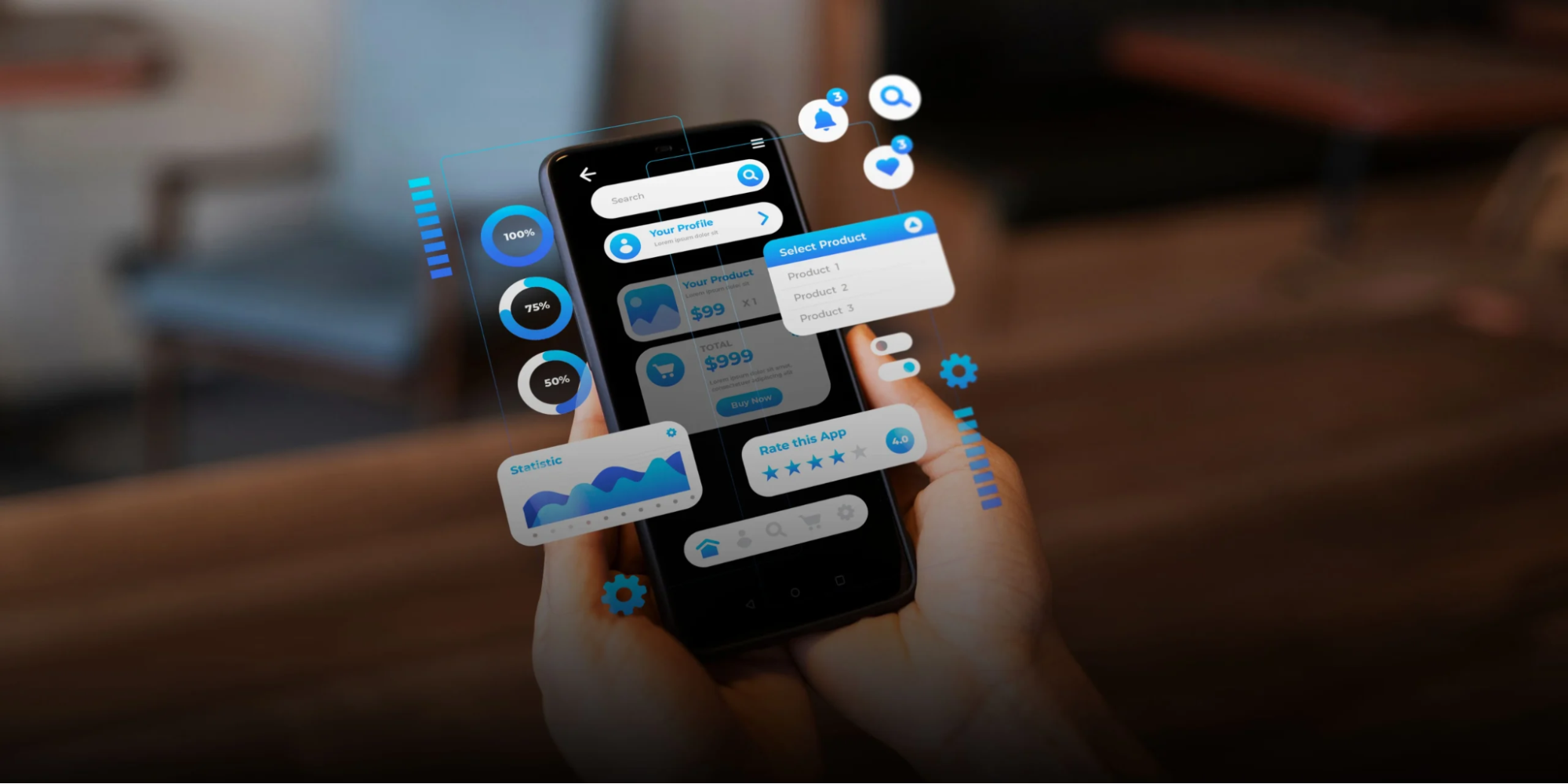

The growing benefits of mobile apps for business have transformed mobile applications from optional digital tools into essential business assets. For many industries, mobile apps are no longer considered secondary marketing assets. They are now being used as operational platforms for acquiring customers, selling customers, retaining customers, handling logistics, communication, analytics, automation, and service delivery.
Relying fully on websites is no longer the case, and businesses are now migrating to the mobile ecosystem to accommodate the changing behaviour of users. Today’s customers are looking for quicker interactions, increased customization, real-time updates, embedded payments and mobile-first access.
But, Mobile App Development isn’t just about launching an app in the app stores. The planning of systems, infrastructure, scalability, user flow, security, QA, analytics, and maintenance operations are all critical for real-world commercial applications.
This article gives an actual professional Mobile App Developers point of view about the real business advantages of mobile applications. It covers the reality of enterprise and commercial app projects, as well as the realities of how agencies organize their development operations, how procurement teams compare vendors, and why operational discipline is the key to long-term success.
Understanding Mobile App Development
Mobile App Development is the process of creating, developing, testing, deploying, and maintaining software applications for mobile devices.
This includes:
- Android applications
- iOS applications
- Cross-platform applications
- Enterprise mobile systems
- e commerce applications
- Customer portals-booking systems
- Field service applications
- Internal workforce tools
Modern applications communicate with:
- APIs
- Databases
- Payment systems
- CRM platforms
- Cloud infrastructure
- Authentication systems
- Push notification services
- Analytics platforms
App development, therefore, is a software engineering process and a business operations process that helps organizations unlock the long-term benefits of mobile apps for business.
Benefits of Mobile Apps for Business: Why Companies Invest in Apps
Mobile apps have a direct operational benefit that websites can’t easily provide, which explains why businesses invest in mobile apps. The primary benefits of mobile apps for business include improved customer accessibility, stronger retention, better operational efficiency, and higher conversion rates.
Key Commercial Drivers
Increased Customer Accessibility
One of the most immediate benefits of mobile apps for business is allowing customers to access services directly from their own device environment.
This decreases the friction of:
- Repeat purchases
- Bookings
- Customer support
- Notifications
- Loyalty systems
- Account access
Apps are always available from the home screen of the device unlike websites.
Improved Customer Retention
One of the major benefits of mobile apps for business is improved customer retention through continuous engagement.
Features such as:
- Push notifications
- Saved preferences
- Personalized dashboards
- Loyalty rewards
- In-app messaging
Find ways to make interaction more frequent. Without external re-marketing systems, websites generally cannot sustain the same level of recurring engagement and drive. Without external re-marketing systems, websites generally cannot sustain the same level of recurring engagement and drive.
Faster Operational Efficiency
Among the major benefits of mobile apps for business is the ability to streamline repetitive operational processes. Examples include:
- Appointment scheduling
- Inventory tracking
- Delivery management
- Staff coordination
- Payment processing
- Customer onboarding
Minimizing the friction associated with operations decreases support needs and increases productivity.
Mobile apps for businesses serve many functions. Businesses can leverage mobile apps for a number of purposes.
Enhanced Customer Experience – One of the Key Benefits of Mobile Apps for Business
Well-designed mobile apps make user interactions much easier.
Example
An ecommerce application can include:
- One-click checkout
- Saved addresses
- Stored payment methods
- Personalized recommendations
- Order tracking
This will cut down on the transaction friction of conventional browser-based systems. Professional UI/UX Design for Apps is a key factor in customer satisfaction and conversion rates.
Better Brand Visibility
Among the most valuable benefits of mobile apps for business is continuous brand visibility on customer devices. Apps create continuous brand presence.
The business will be seen whenever users unlock their devices:
- App icons
- Notifications
- Widgets
- Updates
This is repeated exposure which builds brand awareness.
Higher Conversion Rates
Higher conversion rates are another important benefit of mobile apps for business when applications are properly optimized. Optimized mobile apps tend to be more efficient in converting leads than websites if they are done correctly.
Why Conversion Improves
Apps reduce:
- Loading delays
- Login repetition
- Navigation complexity
- Checkout friction
When it comes to mobile UI systems, speed and task efficiency are key.
Real-Time Communication
Real-time communication is one of the strongest benefits of mobile apps for business because it enables instant customer engagement. Businesses can communicate instantly with the push notification system.
This supports:
- Promotions
- Order updates
- Alerts
- Appointment reminders
- Re-engagement campaigns
But too many alerts can lead to user fatigue and the risk of uninstallation. Professional notification systems maintain a controlled rate of notification.
Improved Data Collection and Analytics – Benefits of Mobile Apps for Business
Apps give very specific behavioral insights. Businesses can monitor:
- Session duration
- Feature usage
- Retention patterns
- Funnel drop-offs
- Device behavior
- Geographic activity
This operational data can be used for continuous optimization.
Offline Functionality
Offline functionality is another important benefit of mobile apps for business, especially for organizations operating in remote or low-connectivity environments.
Examples include:
- Saved content
- Cached data
- Offline forms
- Downloaded media
Logistics, field service, and enterprise scenarios are particularly where offline support plays a crucial role.
Competitive Advantage
Gaining a competitive advantage remains one of the long-term benefits of mobile apps for business in highly competitive markets. In many sectors, it seems, that mobile infrastructure is becoming a thing of the past.
Professional mobile ecosystems enhance:
- Customer perception
- Operational convenience
- Service responsiveness
But the wrongly designed applications can be detrimental to a reputation more than no apps at all.
Site Assessment and Mobile App Development Scope Definition
Whether you are a professional app builder, the first step in app building is operational assessment. Seasoned agencies do not start coding right away.
Initial Discovery and Assessment
Business Objective Evaluation. Agencies first identify:
- Revenue goals
- Operational pain points
- User expectations
- Market competition
- Workflow inefficiencies
Each business has unique requirements for its app architecture.
Technical Environment Inspection
Teams inspect:
- Existing systems
- CRM infrastructure
- APIs
- Payment gateways
- Databases
- Legacy software
- Hosting environments
Planning for mobile projects without taking into account compatibility with existing infrastructure is why many mobile projects fail.
Scope Definition Process
To maximize the benefits of mobile apps for business, Professional App Planning & Requirement Analysis determines:
- Feature priorities
- User roles
- Device support
- Platform selection
- Security requirements
- Scalability expectations
Uncontrolled scope growth and budget volatility is typical of projects without structured scope definition.
App Plan and Requirement Analysis.
The operational phase of Professional App Planning & Requirement Analysis is one of the most crucial phases. Poor planning leads to downstream failures which are very costly during development. Requirement Categories
Functional Requirements
Specify the functions that the app should perform.
Examples:
- User authentication
- Payment processing
- GPS tracking
- Messaging systems
Non-Functional Requirements
Define operational expectations.
Examples:
- Performance
- Scalability
- Security
- Uptime
- Accessibility
Agencies with experience in this area have extensive requirements documentation before engineering can commence.
Android App Development vs iOS App Development
One of the common challenges faced by businesses is choosing a platform.
Android App Development
Android App Development offers:
- Wider global reach
- Greater device diversity
- Robust emerging market engagement
Android fragmentation complicates the testing process, however.
Multimedia apps need to work on numerous devices:
- Screen sizes
- Hardware types
- OS versions
iOS App Development
Usually, iOS App Development provides the following:
- More consistent hardware environments
- Improved share of premium market.
- Simplified device testing
But the requirements for the Apple ecosystem are more stringent. The strategies used on the platforms are recommended by professional agencies and depend on the audience and the commercial goals.

The mobile application design interface. Mobile application design interface.
There are a lot of differences between mobile UI design and desktop UI design.
Mobile Interface Constraints
There are a number of factors that designers have to consider:
- Limited screen space
- Touch interaction
- Thumb reach zones
- Device orientation
- Performance limitations
A good mobile UI streamlines the process where possible.
Mobile UX Design Principles:
These UX principles help businesses fully realize the benefits of mobile apps for business and improve user satisfaction.
- Fast onboarding
- Minimal friction
- Gesture consistency
- Clear navigation
- Efficient task completion
The behavior of uninstallation happens quickly with poor UX. There are easy alternatives out there for users to give up on confusing applications.
Developing a mobile application in a professional workflow.
Professional app development consists of well-defined stages.
Discovery is the initial stage of the process.Discovery is the first step in the process.
This phase includes:
- Business analysis
- User research
- Competitive analysis
- Technical assessment
The second step is the wireframe and User Experience Flow Design.
Teams create:
- User journeys
- Navigation maps
- Task flows
- Screen structures
If there is no planning of flow, the usability of the app rapidly gets worse.
Designing the UI System
Designers create:
- Typography systems
- Component libraries
- Color systems
- Interaction patterns
Consistency is a key issue as applications grow.
Development Phase
Engineers build:
- Frontend interfaces
- Backend systems
- API integrations
- Authentication logic
- Database connections
Professional agencies, to limit deployment risk, differentiate staging and production environment.
Testing and Quality Assurance
One of the most critical stages in operation is the QA stage.
Professional testing includes:
- Functional testing
- Device testing
- Performance testing
- Security testing
- Accessibility testing
- API validation
Those apps that do not do proper QA testing frequently fail after they’re launched. To deploy and monitor your application.
Once the launch, teams are monitoring:
- Crash reports
- User retention
- Device compatibility
- Server performance
- Analytics behavior
Launch is not the end of optimization; it is the beginning of continuously improving the benefits of mobile apps for business.
Ensuring the high quality of mobile applications.Quality Assurance in Mobile Application Development.
Professional QA is similar to an industrial inspection system. Minor problems can result in significant failures to operate later.
The following are typical QA Inspection Areas:
Functional Validation
Teams inspect:
- Login systems
- Payment flows
- Notification behavior
- Form handling
- Offline functionality
Device Compatibility Testing
Apps are tested on:
- Screen sizes
- OS versions
- Hardware conditions
Performance Testing
Inspection includes:
- Load speed
- Memory usage
- Battery impact
- Network behavior
Continuous Improvement Systems
App development is a process that is repetitive.
Post-Launch Optimization
Teams evaluate:
- Retention rates
- Feature adoption
- Session duration
- Funnel abandonment
- Crash analytics
As code is actually used in the real world, operating flaws not seen during development become apparent.
Inadequate operational decisions during the creation of mobile applications.
Operational imbalance is one primary cause of many project failure.
In App Development, Improper ‘Dilution Ratios’ is a serious problem.
In the real world of mobile development, the concepts of dilution imbalance are about the bad allocation of resources between:
- Features vs usability
- Speed vs stability
- This is a matter of UI complexity and performance.
- Budget vs testing depth
Example
Apps with too many features tend to overload:
- Slower performance
- Confusing navigation
- Higher crash rates
- Increased maintenance complexity
Professional agencies care more about getting things done than having features.
This indicates poor “Dwell Time” in Testing and Stabilization.
If the dwell time is inadequate in app operations, it means that the dwell time before the release is not sufficient.
Avoid rushing or rushing into the situation.
- Hidden bugs survive
- There have not been any device conflicts resolved.
- API instability persists
- User frustration increases
It’s possible to have enough QA exposure with experienced agencies before deployment to production.
Cost vs Mobile App Development Quality and Frequency
The operational depth is directly impacted by budget.
Low-Cost App Development Risks
From cheap app services, expect the following:
- Weak architecture planning
- Minimal testing
- Poor documentation
- Inexperienced developers
- Limited scalability preparation
These apps could look like they work at first, but then they break when things get hectic.
Why Professional Mobile Development Costs More
An agency that has been around for a while invests in:
- Planning
- Security
- QA
- Infrastructure
- UX research
- Documentation
- Monitoring systems
These operational layers reduce long-term technical debt.
Small Contracts vs Enterprise Mobile App Management
Small Business App Projects
Smaller projects may focus on:
- Core functionality
- Budget efficiency
- Fast deployment
- Simplified maintenance
Examples include:
- Booking apps
- Local service apps
- Small ecommerce systems
Enterprise Mobile Systems
Enterprise applications require:
- Role-based permissions
- Advanced security
- Scalability architecture
- Compliance systems
- Integration frameworks
Things become very complex when scaling into the enterprise level.
Expert Levels of Mobile App Development
Junior Developers
Typically handle:
- Simple interfaces
- Basic API integration
- Standard functionality
Mid-Level Engineers
Handle:
- Architecture implementation
- State management
- Performance optimization
Senior Mobile Architects
Manage:
- Scalability planning
- Security systems
- Infrastructure strategy
- Deployment pipelines
- Cross-platform governance
Often, businesses don’t realize the knowledge needed for massive mobile ecosystems.
Mobile app scalability problems.
The more users that log into, the greater the technical pressure will be.
Common Scalability Problems
- Server overload
- API bottlenecks
- Database congestion
- Notification delays
- App crashes
Professional Architecture Planning allows for planning ahead of the future growth.
GDPR Compliance and Security Concerns
Operational damage is significant when there is a security failure.
Protecting user data is essential because security directly impacts the long-term benefits of mobile apps for business.
Professional teams implement:
- Encrypted communication
- Secure authentication
- Session protection
- Secure payment handling
- API security
Lack of security can cause a loss of trust quickly.
Real-World Business Examples
The following examples demonstrate practical benefits of mobile apps for business across different industries.
Ecommerce Applications
Benefits include:
- Faster checkout
- Loyalty integration
- Push remarketing
- Personalized recommendations
Logistics Applications
Apps improve:
- Route management
- Driver coordination
- Delivery tracking
- Real-time communication
Healthcare Applications
Professional apps support:
- Appointment scheduling
- Patient communication
- Secure record access
Private and strict compliance are necessary in a healthcare setting.
How to Make Decisions – Approaches of Professional Mobile App Agencies.
Good agencies make decisions about their operations based on several factors.
Key Decision Variables
Business Objectives
Measurable operational goals must be supported by apps.
User Behavior
The actual usage patterns are very important in design decisions.
Infrastructure Constraints
Technical realities dictate architecture choices.
Budget Limitations
Not everything should be in a first release.
Long-Term Scalability
As user bases increase, apps need to be kept in good working order.
Procurement Logic Used by Businesses Selecting Mobile App Development Services
Agencies are assessed in a systematic manner by professional procurement teams.
Procurement Evaluation Areas
Technical Capability
Are they able to develop systems that can be scaled?
QA Procedures
Are there any formal tests that they run?
Security Experience
Are they able to manage sensitive data effectively?
Documentation Standards
Will internal teams be able to support the system as time goes on?
Communication Structure
Is it possible for the organisation to manage effectively with stakeholders? Engineering discipline is the key factor that many showcases are not successful.

Common Mobile App Development Failures
Weak Planning
If requirement analysis is poor, then budget instability and scope confusion are sure to occur.
Ignoring UX
Usability issues with feature-rich apps kill apps.
Inadequate Testing
Lack of Quality Assurance yields inconsistent releases.
Failure number 4 is the lack of scalability planning.Failure #4 is the lack of scalability planning
The apps developed for specific short-term needs tend to fail when they start to grow.
Weak Maintenance Strategy
Applications need to be continually updated, monitored, and optimized. Without maintenance, over time, operation breaks down.
Future Trends in Mobile App Development
As technology evolves, the benefits of mobile apps for business will continue expanding through AI, automation, and predictive analytics.
A future app ecosystem will more and more focus on:
- AI-driven personalization
- Cross-platform framework
- Offline-first architecture
- Predictive analytics
- Voice interaction
- Wearable integration
- Real-time synchronization
But the basic concepts of usability, stability, performance and scalability will remain paramount.
FAQ’s
What is the reason why companies invest in mobile applications, rather than just websites?
The mobile apps offer more speed, retention, push notification, offline support and personalisation than traditional websites. Apps also help users to avoid hassles on repeat users as the login session, payment methods, and preferences are stored locally. Increased engagement and better efficiency in business operations. Compared to websites, professional mobile apps can deliver higher conversion rates since interactions are quicker and more streamlined. But to be commercially effective over time apps must be well planned, maintained and quality assured.
What is the difference between Android App Development and “iOS App Development”?
iOS App Development has a more closed hardware environment and a smaller market share compared to Android App Development. Android needs more comprehensive testing due to fragmentation issue. iOS apps typically offer higher consistency in performance from device-to-device. The choices of platforms are typically determined by the business’s target demographic, geographic markets, business objectives and budget. Depending on the business priorities and the scales involved, professional agencies will often suggest staged deployment strategies.
Why is it crucial to undertake App Planning & Requirement Analysis in the initial stages of development?
Requirements analysis is the process of determining the scope and technical expectations of the project, the priorities of features, and the requirements for scalability, prior to the engineering phase. Projects often fall behind timelines, run over budget, encounter feature conflicts, and have usability issues when not planned properly. Professional planning helps to map out dependencies and integration requirements, identify user flows and infrastructure constraints early in the process. This helps to minimize operation risks during the development phase. Good planning also ensures effective stakeholder, developer, designer and procurement communication throughout the project lifecycle.
What is the impact of UI/UX Design for Apps on the businesses?
A well-designed app with good UI/UX helps to make the application more usable, customer-satisfying, and efficient for retaining and converting. Unintuitive interfaces leads to higher user frustration, drop-off and uninstallation rates. Professional app UX eliminates friction by making navigation easier, onboarding smoother and repetitive actions simpler. Mobile attention spans are short and users want quick, easy interactions. A robust interface system also helps cut support requests and boost efficiency for companies with extensive user bases or transactional processes.
Why do the Mobile App Development Services have a higher price tag than freelancers?
Prof. agencies spend a lot of money on planning, architecture, QA, security, scaling and maintainability. A number of cheap development services simply do not take into account the quality of the infrastructure, depth of testing, or future growth in operations. Well-established agencies employ well-designed workflows that include UX research, documentation, security validation, device testing, and monitoring systems. These layers of operation help to minimize technical debt and future repair expenses. When assessing vendors for businesses, consider more than just the price of the initial development.
So, how is a quality assurance involved in mobile app development?
Quality assurance is used to ensure applications work properly when they are used in the real environment prior to their release to the public. The professional QA teams check the device compatibility, the behavior of the device, the security systems, the communication between the API and the device, its functionality when there is no Internet connection, and the user flows. In the case of enterprise settings or payment systems, even minor issues can lead to significant operational issues once they are in production. Structured testing provides a lower crash rate, negative reviews and support costs. Good development companies consider QA a continuous process, not a last step checklist.
How to select the correct Mobile App Development agency?
Generally, businesses assess technical knowledge, communication mechanisms, scalability, security and QA maturity. Document quality, maintenance support and integration experience with existing systems are also evaluated by the professional procurement teams. Operational discipline is more important than visual portfolios. The vendors are strong and are able to present clearly the decisions made regarding architecture, testing process, deployment process, etc. and also maintenance process after the deployment. Reliability over price is a top consideration for businesses when choosing a provider, and a fast delivery isn’t always the most reliable indicator.